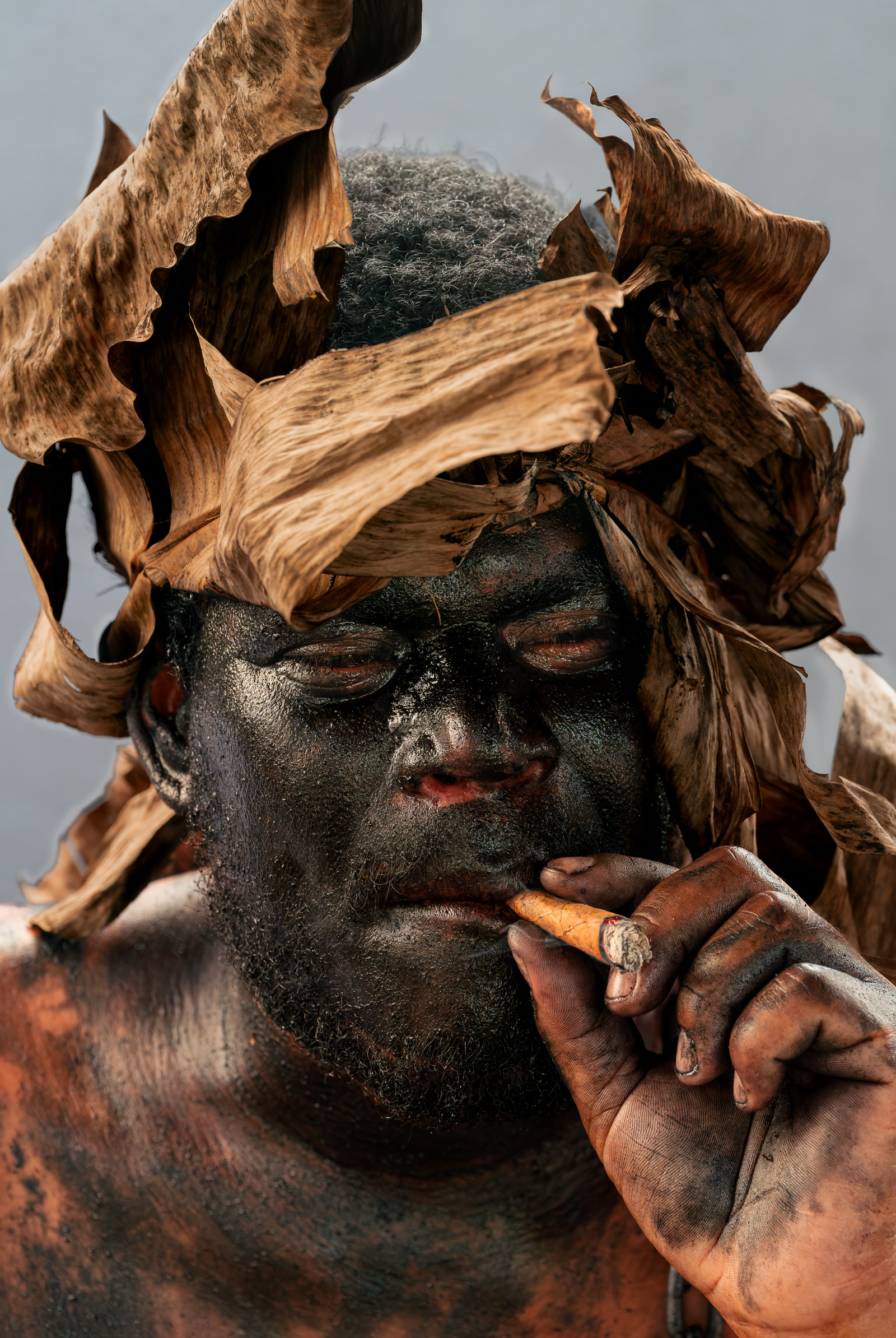
Nego Fugido
The Cigar
- Date
- 2026
- Location
- Acupe, Santo Amaro, Bahia, Brazil
Curatorial text
The cigar in this photograph is part of the costume of a character in Nego Fugido, a traditional performance in Acupe, a district of Santo Amaro, Bahia. Understanding its significance requires looking at the community's cultural history and the performance's connections to Afro-Brazilian religious traditions. Nego Fugido has longstanding ties to Candomblé, but that does not mean every object used in the performance has a specific ritual function.
Tobacco has its own significance in different Afro-Brazilian religious traditions. In Caboclo Candomblé, for example, cigars may be associated with particular spiritual entities and practices, depending on the customs of each religious house. This context alone, however, does not establish what the cigar means in this photograph. The uses documented in Afro-Brazilian religions must be distinguished from the role the cigar plays in the characterization of Nego Fugido's figures.
The title, The Cigar, brings the photograph into the realm of everyday language. Its familiar wording contrasts with the historical and religious weight of the traditions associated with the performance. The title does not define the cigar's meaning. Instead, it points to the ways a community recognizes and names elements of its own culture.
The characters' appearance is shaped collectively through clothing, body paint, objects, and performance. Together, these elements form a visual language passed down through generations, sustained by shared knowledge and adapted in each presentation. The cigar is part of this composition, and its role cannot be understood apart from the practices that make up Nego Fugido.
The connection with Candomblé does not automatically make every element of the performance a religious symbol. Nego Fugido brings together different cultural references that retain their distinct identities. Its theatrical structure draws on the history of slavery, capture, and freedom, while its religious connections reflect the community's cultural history.
The cigar draws attention to a familiar object whose significance calls for closer examination. The photograph invites us to consider the knowledge involved in creating the character and the cultural complexity of that process. The cigar does not provide a definitive explanation of the figure portrayed. Understanding its role requires distinguishing what is known about the tradition from the interpretations prompted by the photograph.