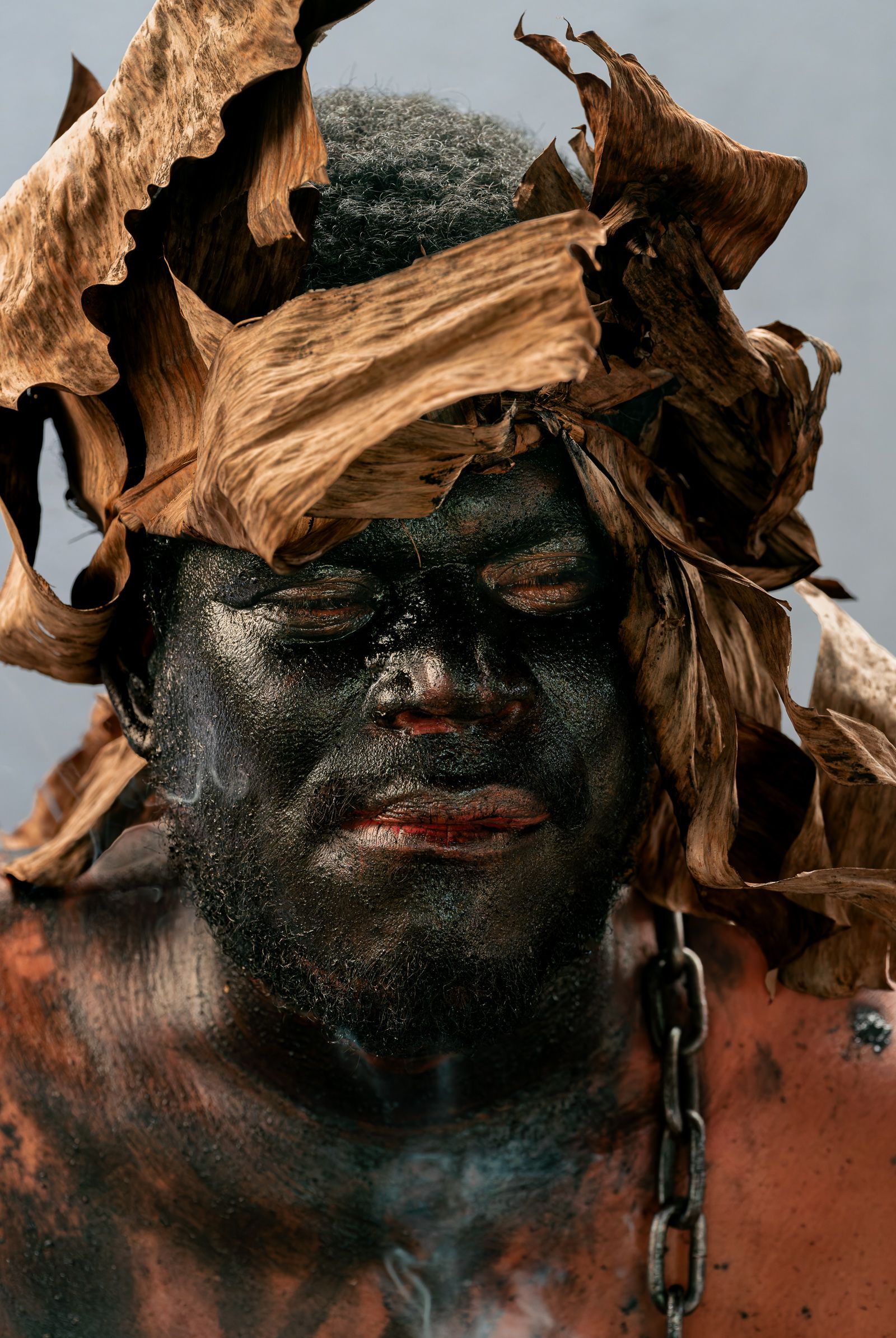
Nego Fugido
The Pipe Shapes the Mouth
- Date
- 2026
- Location
- Acupe, Santo Amaro, Bahia, Brazil
Curatorial text
The saying that gives this photograph its title draws on an everyday observation to make a broader point about the effects of habit. Repeated actions change the way we behave, react, and relate to what we do. The proverb turns this observation into a vivid image: a familiar practice, repeated over time, can leave its mark on the person who adopts it.
The saying’s force lies in its directness. The pipe offers a concrete image of a broader idea: repetition is never neutral. What we do regularly shapes our behavior, even when we fail to notice the change as it happens. The proverb captures this insight in a concise expression that remains familiar in everyday speech.
In Nego Fugido, a popular cultural tradition from Acupe, a district of Santo Amaro, Bahia, repetition takes on a different significance. The tradition’s continuity depends on learning how to perform, becoming familiar with its characters, and passing knowledge down from one generation to the next. This process involves understanding the performance, recognizing its codes, and taking part in a collective practice.
The connection between the proverb and the tradition invites us to consider how habits shape the people who acquire them. Repeating a practice means mastering its routines and adopting ways of acting that gradually become part of one’s own experience. Tradition is sustained through this ongoing learning, without each generation simply reproducing every choice made by those who came before.
The title also raises a question about the power of custom. Repetition can strengthen knowledge, but it can also make certain behaviors so familiar that they no longer come under scrutiny. The proverb captures this ambiguity through the image of a physical change. Its plainspoken language conveys the idea without spelling out every consequence of habit.
Read alongside the title, the photograph takes on a meaning that does not depend on attributing a specific intention to the character. The saying offers a way of interpreting the image, linking familiarity with a practice to the effects it produces. The photograph need not literally illustrate the proverb for the connection to hold.
The pipe shapes the mouth because repetition changes the way we do things. In a tradition passed down collectively, this idea invites us to consider both the power of learning and the changes that come with its continued practice.