Nego Fugido
Relief
- Date
- 2026
- Location
- Acupe, Santo Amaro, Bahia, Brazil
Curatorial text
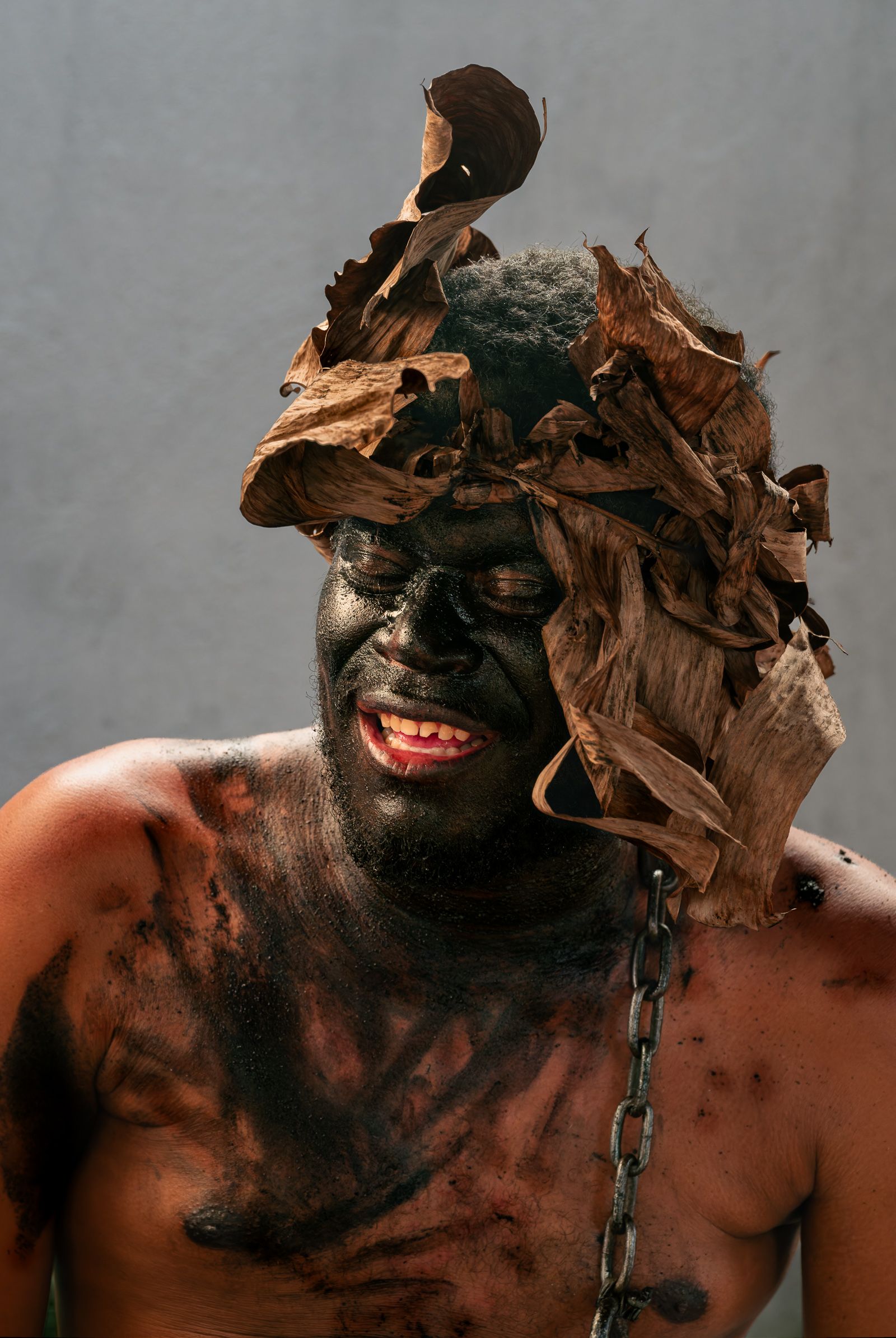
Relief comes when the intensity of an experience begins to subside. In Nego Fugido, a traditional performance in Acupe, a district of Santo Amaro, Bahia, the reenactment of capture, persecution, and the struggle for freedom demands physical endurance, familiarity with traditional codes, and interaction with the audience. The photograph draws us into a moment when tension eases and rest becomes possible.
Relief presupposes an earlier strain, a pressure that lifts and allows someone to recover their strength. Against the historical backdrop of slavery and the struggle for freedom, the title takes on a broader significance. The pause does not erase the violence being reenacted or resolve the conflict at the heart of the performance. It marks a change in the experience of those taking part.
Nego Fugido has endured through the transmission of knowledge and the involvement of the community. Each performance brings together characters, participants, and spectators in a collective undertaking shaped by inherited traditions and individual ways of taking part. The tradition lives on through this shared practice, which demands both physical effort and an intimate knowledge of its codes.
The title invites a more intimate reading of this dynamic. To feel relief is to regain some strength after a demanding experience. The photograph brings this individual response into proximity with the collective intensity of the performance, without treating the expression on the participant’s face as a definitive account of what they feel. Relief is an interpretation suggested by the title, not a certainty about the participant’s inner experience.
Focusing on this pause broadens our understanding of the performance. Its intensity does not reside solely in its most dramatic moments. Shifts in pace also shape the unfolding action, making the demands of the performance and the relationship between exertion and rest more apparent.
Relief does not bring the experience to an end. It marks a moment of respite before the performance resumes. The image holds that possibility of rest and reminds us that a collective practice can endure only if it makes room for the pauses that are part of its enactment.