Time
Infinity simbol
Curatorial text
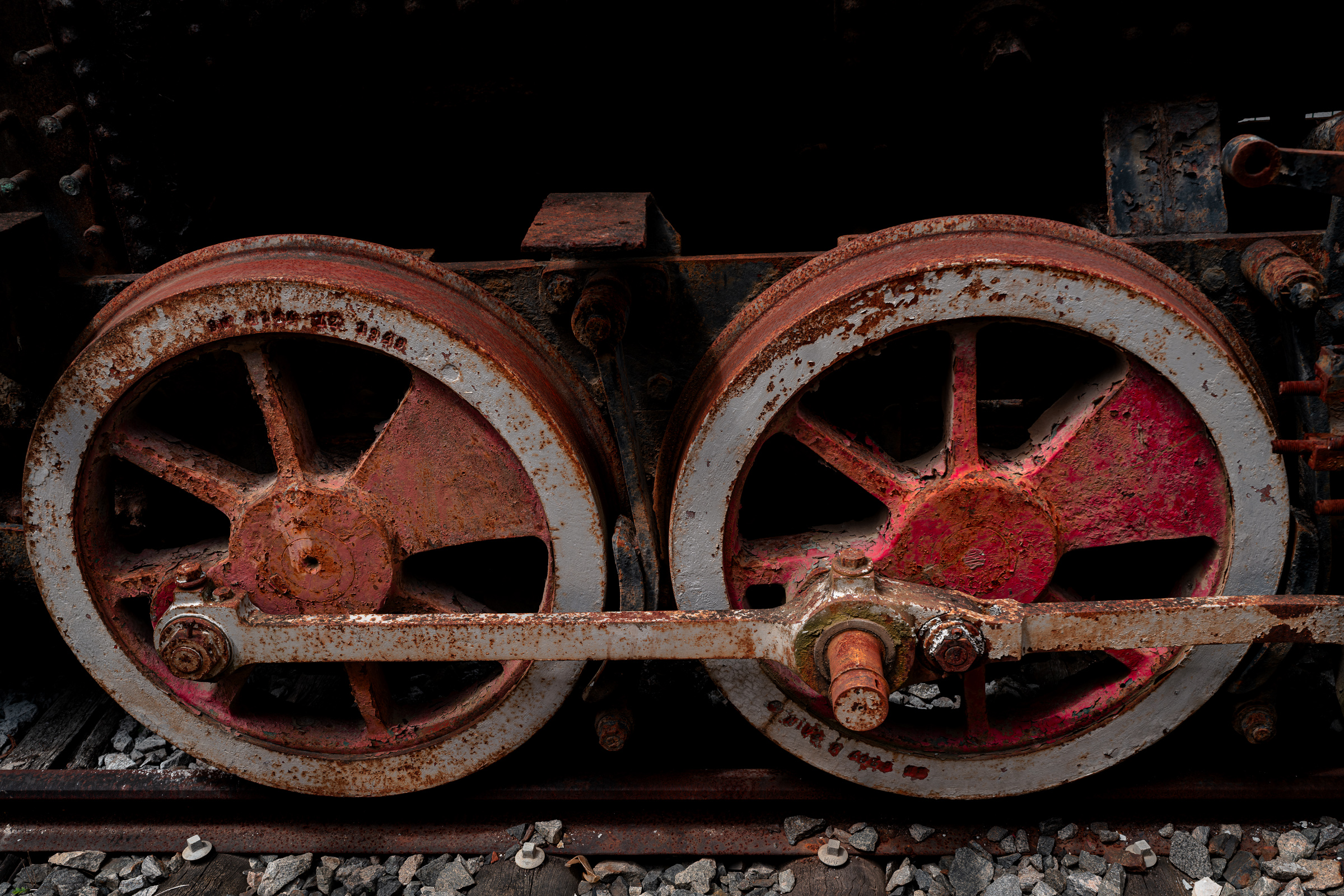
The first thing that came to me when I looked at this image was infinity. The symbol. That sideways eight I learned about in high school. I’ll admit I’ve always liked the symbol more than the mathematics behind it. I never had any serious trouble with math or the other exact sciences. I just never had much of an affinity for them. They demanded more dedication and a way of thinking that didn’t appeal to me. Cartesian thinking makes me uncomfortable. Feeling opens my eyes more. The eyes of the soul and the heart.
My father was my complete opposite. Thoroughly mathematical. Even in everyday life and in the way he dealt with people. To him, everything had a purpose. A sandal was meant to protect your foot and keep the sole of your foot from getting hurt. He couldn’t understand why a pair costing two thousand reais could possibly be better than one costing six dollars and fifty cents. Maybe food was the exception. Even so, toward the end of his life he became even more Cartesian. Everything needed a reason. Brand. Comfort. Ego. Exclusivity. All of that seemed pointless to him if it didn’t change the purpose of whatever was in front of him.
Looking at these wheels brought me back to that way of thinking. They were built for a very specific purpose inside a machine. Now they are in front of me for another reason. The way they sit creates a shape I recognize immediately. The sideways eight. The infinity symbol.
Maybe that change in context is what has kept me thinking about this image. Something can stop doing what it was made to do and still become something else in the eyes of the person looking at it. Its original purpose remains part of the locomotive’s history. But it is no longer enough to explain what I see.
And what I see takes me back to infinity.
I don’t know whether infinity exists in the way we imagine it. We can represent it. We can give it a symbol. We can talk about it. But we know very little about what it would actually mean to experience something that never ends. It’s an idea we know more through language than through experience. Maybe something similar happens when we think about a black hole. We know about its enormous gravitational pull. Much of what lies beyond that remains outside anything we can actually experience.
That’s when I thought of my maternal grandfather. At one hundred years old, he told me that living forever must be a curse. I never forgot that. Maybe because, at that age, the idea of eternity could be seen from a completely different place. I also thought about Mr. Jingles, the little mouse in The Green Mile. He keeps living while everything around him disappears. There’s something about that story that reaches into that strange place where permanence stops being something we necessarily want.
Nothing lasts forever. Time acts on everything. Iron rusts. Surfaces change. Things wear down. We change too. I still think we are the ones passing through time. Time doesn’t have to pass for its consequences to appear.
Maybe that’s why I’m more drawn to infinity as a symbol than as a concept. I like the sideways eight. I like the way it closes in on itself and keeps going. I even like it as a playing card. It’s a shape that draws me in before I have to explain anything about it.
I don’t like throwing things away either. I don’t like getting rid of something that might still have something to say. I don’t like wasting the time of things. Maybe that’s one of the reasons this image stayed with me. A part of a machine that no longer serves its original purpose is still sitting there in front of us, capable of opening up another way of seeing it.
Within Time, the photograph raises a question that doesn’t need to be answered. Infinity appears as a shape I recognize. The locomotive appears as something that has changed over the years. Between the two is the experience of looking and realizing that a form can continue to create meaning long after the purpose for which it was made has disappeared.