Time
Peg Solitaire
Curatorial text
In Peg Solitaire, nothing stays the same after a move. Take one peg away and the entire arrangement changes. Some moves disappear. Others become possible for the first time. The game is shaped by what has already happened. Once a peg is gone, it is gone for good, and everything that follows has to work with the new arrangement.
The way time changes things has a surprising connection to that idea. Time does not make decisions, but it keeps working on whatever stands in its path. Surfaces wear down. Metal corrodes. Repeated use leaves traces. Sun, rain, and exposure slowly alter color and shape. What we see in the present is the accumulated result of events we were never there to witness.
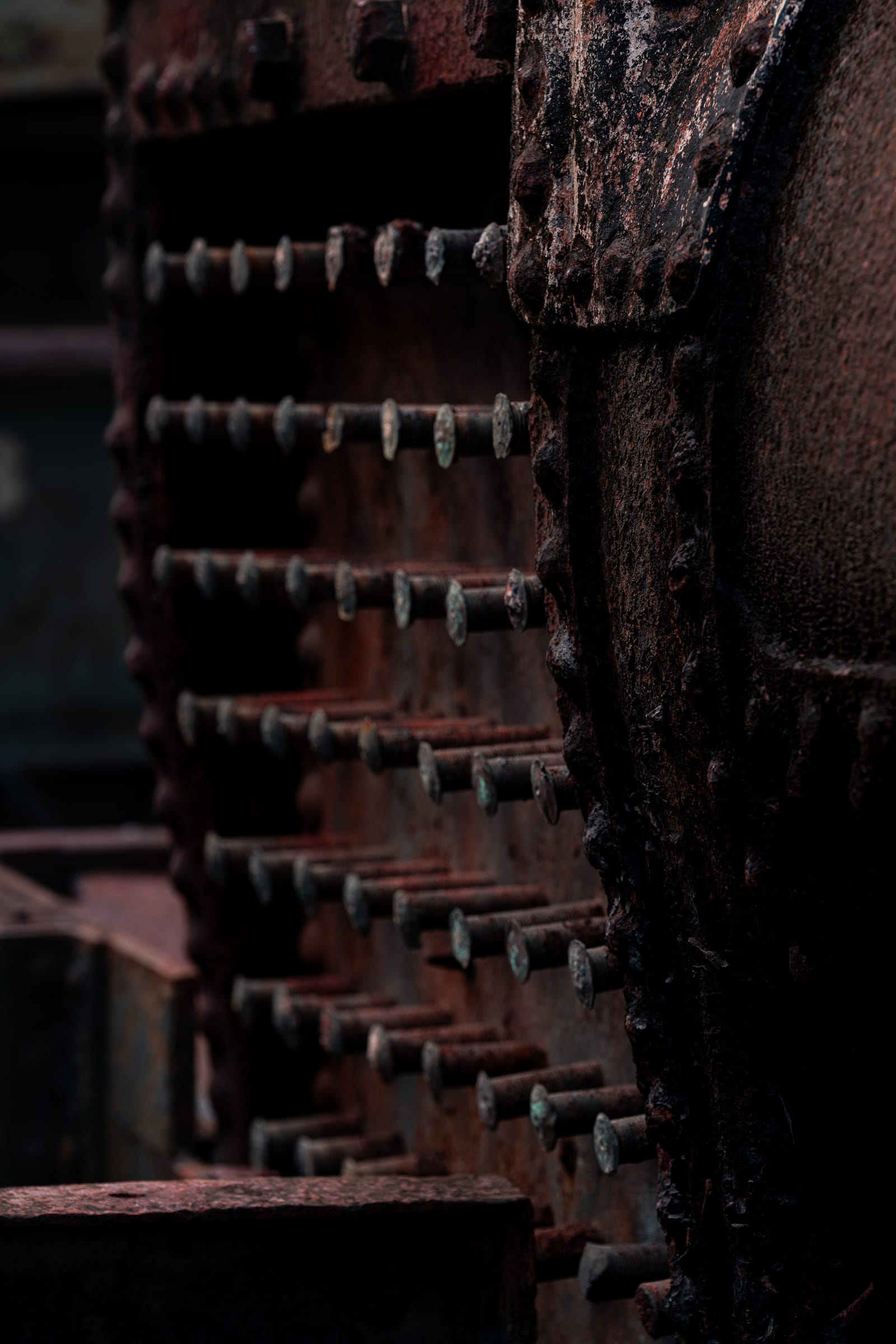
The locomotive in this photograph was built for a very different world. In the industrial system it belonged to, every part had a job. The metal had to hold. The machinery had to stay intact. The whole structure had to endure the demands placed on it. Decades later, the same machine exists under completely different conditions. Rust has worked its way across the iron, changing the surface and compromising the structure. And once the locomotive ceased to serve its original purpose, something else changed with it. A machine made to carry people and things forward became an object outside the system it was built to serve.
Rust matters here because you can actually see the process happening. It is not a symbol for time or a shorthand for old age. It is the physical evidence of a chemical reaction that has been slowly changing the metal. The history is there in the surface itself. Every patch of corrosion, every weakened edge, every change in texture records something that happened without leaving a written account. The past is not being depicted. It has become part of the object.
Peg Solitaire offers a useful way of thinking about this. Every time a peg is removed, the next set of possibilities changes. The locomotive follows a similar logic, without anyone making the moves. Each stage of deterioration changes the conditions for whatever comes next. There is no player, no strategy, no destination. There is only exposure, time, and consequence. What disappears becomes part of the conditions that shape what remains.
The photograph gives us a brief pause in that process. It holds the locomotive in one particular state while the changes continue outside the frame. The image preserves something that was already beginning to disappear at the very moment the shutter closed.
Peg Solitaire is therefore a name for what remains after one change has followed another. It is not about winning or reaching the end. It is about the temporary form produced by everything that has been lost along the way, within a process that has not stopped.
What we see through the camera is not something that escaped time. It is something that time has made impossible to overlook.