Time
Coupling rod
Curatorial text
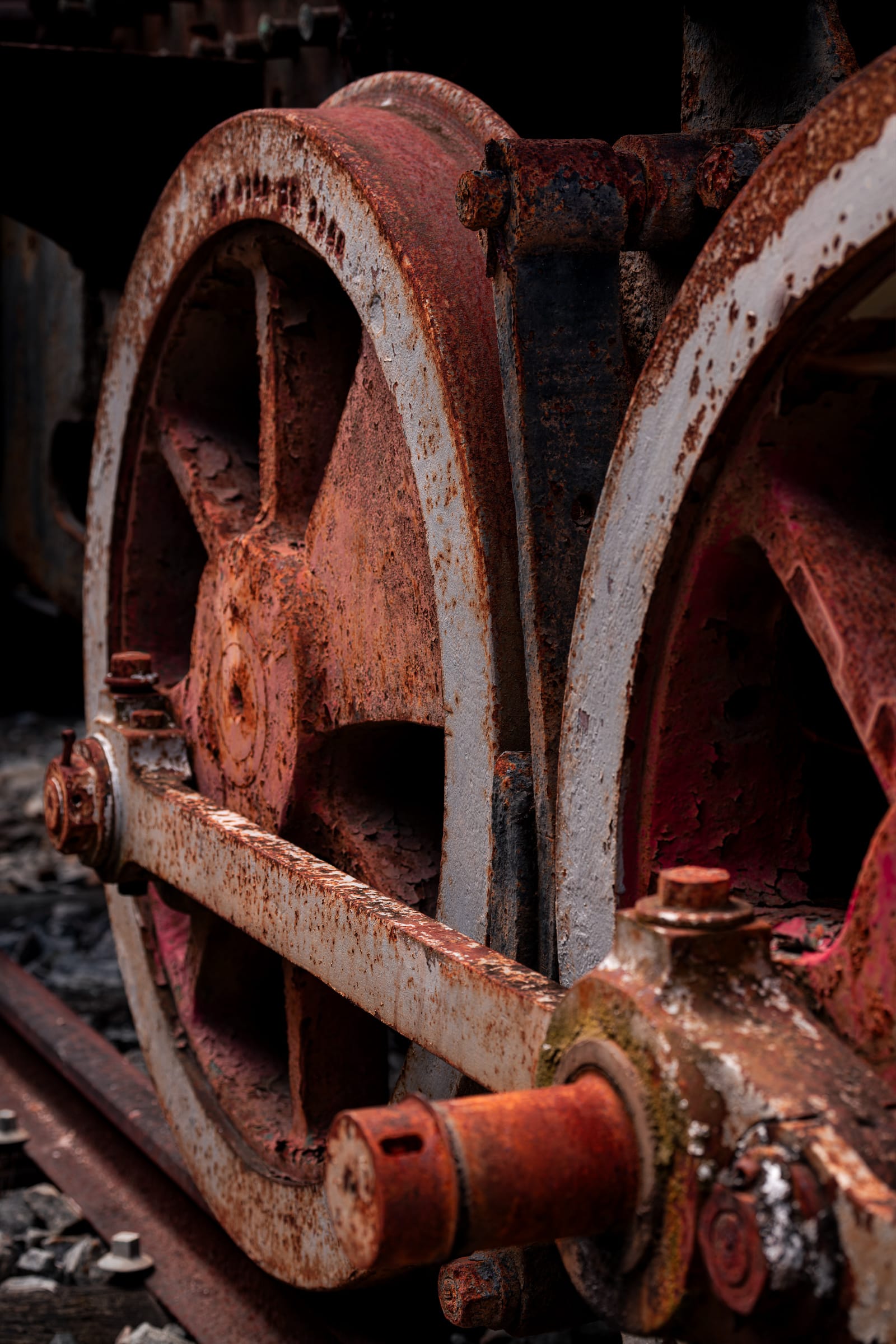
An old locomotive embodies an idea that becomes clearer with age: some forms of strength only become effective when they work together. The coupling rod links the driving wheels, transferring force between them so they move in unison. Its role is easy to overlook because it disappears into the machinery, yet without that connection, the locomotive could not turn its power into forward motion.
The same idea can be applied to maturity. We may spend much of our lives believing that strength means independence, until experience teaches us that some distances are better traveled with people who share our sense of direction. Moving alongside someone does not mean giving up our own path. There are forms of strength that emerge only through connection.
Time becomes part of that understanding. It changes the body, unsettles certainties, reshapes priorities and alters the way we see the road behind us. Things bear its effects as well. Paint flakes away, iron rusts, surfaces crack. These marks are not symbols of time. They are physical consequences of its action, accumulated slowly through years of exposure.
This locomotive no longer serves the purpose for which it was built. Its weathered structure holds the distance between its original function and what it has become, while the coupling rod still expresses the logic of a system designed to bring separate forces into the same motion.
Perhaps maturity is learning something similar. With time, we become more discerning about where to place our strength and which relationships can help carry it farther. On the rails, separate parts must work together to keep the train moving forward. In life, some journeys also depend on knowing which forces to join, which direction to share, and when to move together. Time changes iron. In us, it changes how we choose to move through the world.