Pantanal revealed exhibition: a territory's soul.
Every Carnival Has to End
- Date
- 2026
- Location
- Poconé, Mato Grosso, Brazil
Curatorial text
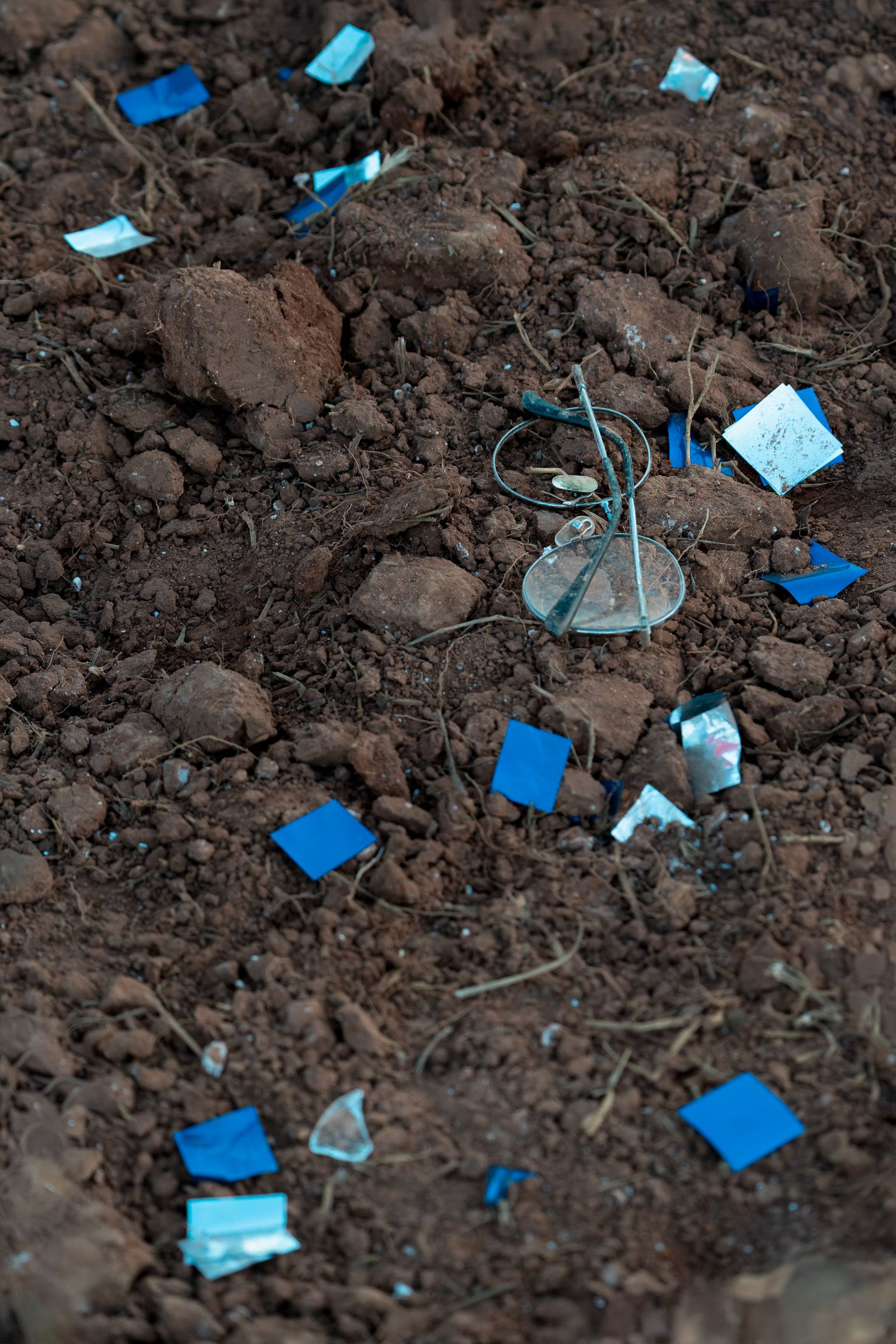
There’s a point when a celebration slips out of the present and becomes memory. The Cavalhada in Poconé is nearing its end when I make this photograph. The horses are gone, the riders have moved on, and the music has faded. What’s left is the churned earth and a few things abandoned in the movement of the celebration: scraps of blue material, a piece of string, a pair of glasses. The ground holds a small material record of what just happened.
It was also when our own trip was coming to a close. We were a group of photographers traveling through Brazil’s Central-West, looking for images, and finding far more than images. There were animals, religious celebrations, churches, people, meals prepared for us, and the generosity of those who welcomed us into their lives. Some encounters simply refuse to fit neatly into a photographic archive.
One of them was José Medeiros. I’m proud to call him a friend. He has spent years building his relationship with the Pantanal by staying close to its people, celebrations, beliefs, and ways of life. José has photographed the Cavalhada in Poconé and other traditions of Mato Grosso without reducing the region to the familiar picture of an immense wilderness. His work helped me see that the Pantanal is also a place of human and cultural depth, something that asks for time, presence, and care.
Maybe that’s why this photograph doesn’t need to show the Cavalhada itself. It catches the moment after the celebration has disappeared from view. The event is over, but it hasn’t vanished. It lingers in the ground, in memory, in the stories people will tell, and in the photographs we take home with us.
There’s an irony in the title. This isn’t Carnival; it’s a Cavalhada. But every celebration comes to an end. Every journey does too. What matters is what stays with the people who were there.
I left the Pantanal changed. Not because of some grand revelation, but because of everything that accumulated along the way. Some of those marks fit inside a photograph. Others stay with you long after you’ve left.
It’s over. There will be more. I know that much.