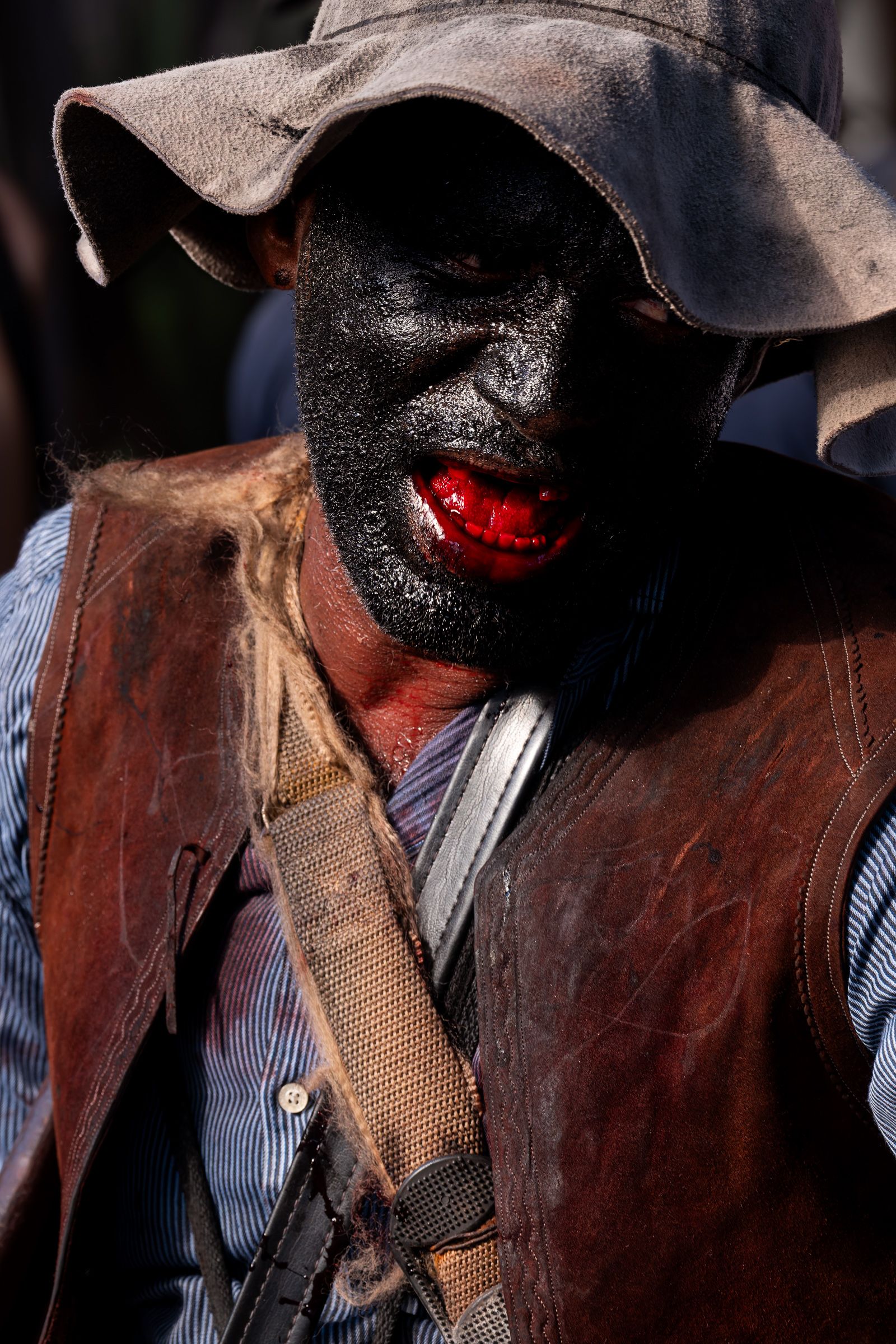
Nego Fugido
Not Just Any Nego, Let Alone Fugido
- Date
- 2026
- Location
- Acupe, Santo Amaro, Bahia, Brazil
Curatorial text
The skin darkened to the deepest possible shade is one of the most striking images in Nego Fugido. Charcoal and oil transform the participants’ appearance, while the red of their lips intensifies the figure. The characterization embraces excess, pushing Blackness into a form that cannot be ignored.
In Acupe, this visual choice is part of a traditional performance that reenacts the persecution, capture, and emancipation of enslaved people. The performance unfolds through the streets with characters, music, dance, and confrontation. Darkened skin ceases to be simply a physical characteristic and becomes a deliberately amplified sign.
People talk about celebrating Blackness, representation, about Blackness being fashionable. That way of putting it irritates me. Skin color should not need a trend or anyone’s validation to have value. It exists. The absurdity is that we still have to argue for its value.
The title grew out of that discomfort. “Nego” carries intimacy, familiarity, affection, and also a history of racially derogatory use. “Fugido” carries the mark of a society that hunted down enslaved people. Together, the words take on an almost insolent force. The Black figure is not diminished by persecution. It grows into excess, darkens to the limit, and becomes impossible to dismiss as a detail.
That is why this photograph interests me. What stands before the camera does not need to represent a race or a theory. For a moment, a person becomes a character in a collective narrative, and an image records that transformation. The photograph takes the excess already present in the scene and carries it into the viewer’s gaze.
The photograph does not soften that intensity. It preserves what the scene creates through excess and allows the figure to continue confronting the viewer even after the performance has left the street. The black brought to its deepest shade, the red of the lips, and the characterization make the image resistant to a quick reading. There is a visual force that comes before any historical explanation and continues to act after we know the history.
A history marked by attempts to control, capture, and subjugate reappears through a figure that fills the scene with such intensity that it refuses to be made small. Nego Fugido darkens, exaggerates, performs, and returns. The photograph preserves that excess and gives it back to the viewer.