Recôncavo: um mundo de muitos mundos e mistérios
Faking Death
- Location
- Acupe, Santo Amaro, Bahia, Brazil
Curatorial text
Injustice infuriates me. Some things leave me stunned into silence; others make me feel an almost uncontrollable urge to do something. I know I can’t right every wrong I find intolerable, but that doesn’t make it any easier to live with my own limitations. Sometimes, my anger comes from that very tension: seeing how terrible something is and having no real way to stop it.
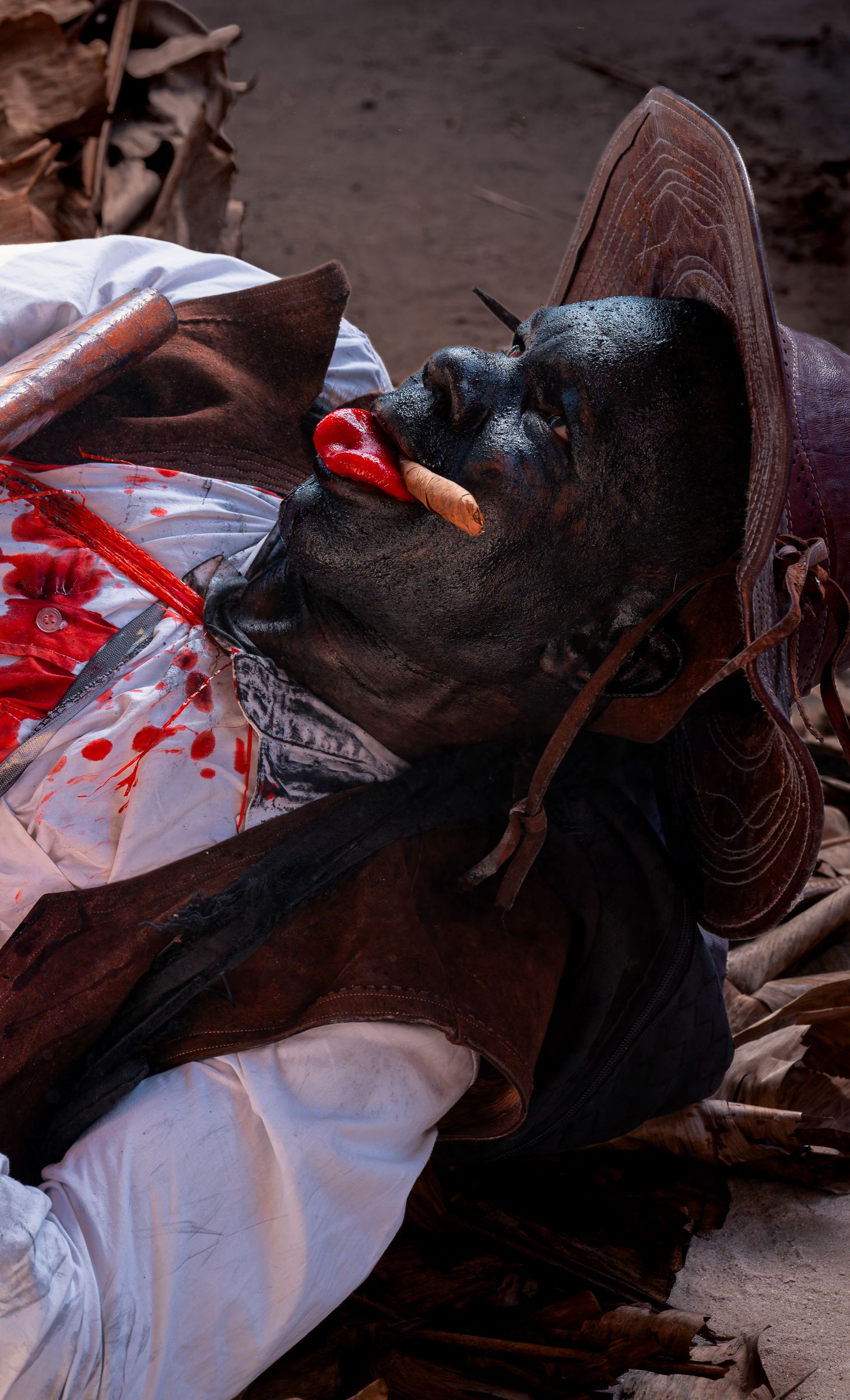
Looking at this photograph, I can’t help wondering about something deeply disturbing: how many enslaved people may have pretended to be dead to escape those hunting them down? I don’t know how common this was, historically, but the mere possibility makes me imagine the desperation of someone having to hold their breath, stay perfectly still, and make others believe they were dead just to avoid being killed. Staying alive would have meant fooling the people who had the power to take their life.
I’ve seen animals freeze and play dead when they’re threatened. But the resemblance doesn’t explain the human experience I’m trying to understand. I’m not trying to rank one species above another or dismiss the ways other living creatures protect themselves. What angers me is the cruelty of a situation in which someone has to rely on their own wits to escape another person’s violence. A mind capable of discovery, creativity, and connection is forced instead to find a way out of a desperate fight for survival.
I like people. I admire those who find a way through the hardest circumstances, who fight when they can and know when to back down if pushing ahead means going under. I admire people who spot possibilities others might miss. Deceiving someone, striking a deal, standing up to an oppressor, or waiting for the right moment can each take a different kind of courage and judgment. There’s nothing inherently noble about suffering, and no one has to face danger like a hero. The simple determination to stay alive deserves respect.
In this photograph, a man lies on his back, his eyes open and his mouth slightly parted. The image is unsettling. Red stains on his white clothes make it look as though he’s been wounded, while his stillness leaves us wondering what has happened and what comes next. I can’t say what the performer is portraying beyond what the scene actually shows. But the photograph raises a question that goes beyond the performance itself: when could pretending to be dead give someone a chance to get away?
Slavery put human beings under the control of others, making freedom a privilege for those who held power. Its violence reached into every part of life: work, family, personal choices, even the most basic conditions for staying alive. Imagining someone having to fake their own death to escape that kind of domination makes slavery’s brutality even harder to fathom. Even the appearance of being alive or dead had to be carefully controlled to stay alive.
Perhaps what angers me most is how easily injustice gets justified and becomes part of everyday life. Some people profit from it, some carry it out, and others choose not to see it. Looking the other way may make life more comfortable for those who don’t want to get involved, but it does nothing to ease the suffering of those on the receiving end of violence. I don’t have to know someone else’s pain firsthand to understand that I have a responsibility toward them.
I don’t expect to put all my anger aside, let alone find answers to every injustice that upsets me. But I don’t want helplessness to turn into apathy. The still figure in this photograph makes me think about the difference between being alive and doing whatever it takes to avoid being killed. It leaves me with a hard question: what kind of power makes someone pretend to be dead just to have a chance at staying alive?