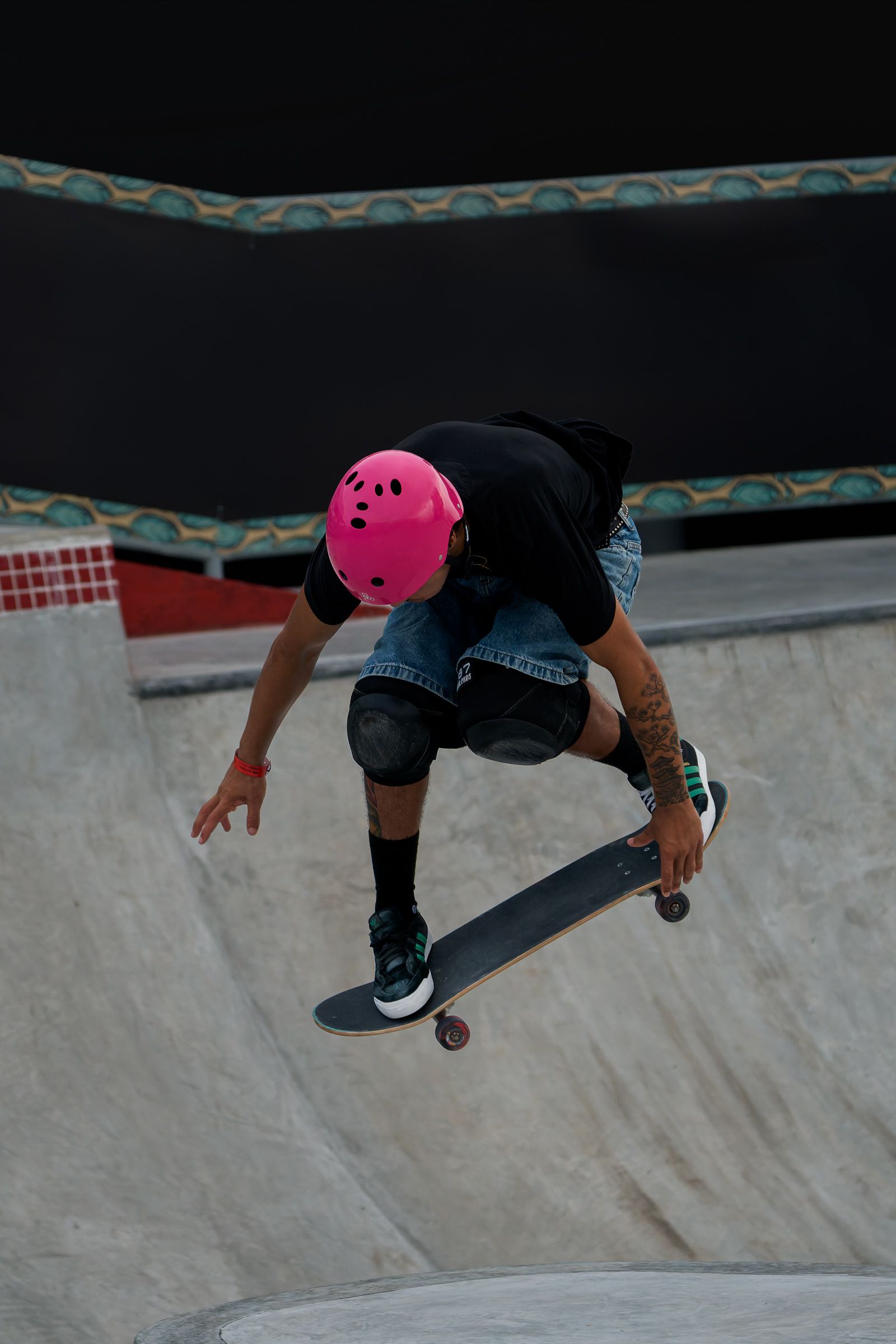
Patrimônio Prospectivo: Gravity
Skateboarding Between Two Worlds
- Date
- 2026
- Location
- Subúrbio Skatepark, Bahia, Brazil
Curatorial text
Something about this photograph stirred a memory I hadn’t consciously summoned. The curve of the bowl reminded me of the ocean. The skater’s hand brought back the sensation of sea foam grazing the skin. The connection was immediate, almost physical. I didn’t reason my way to it; the image took me there before I had words for what I was feeling. It made me wonder whether a culture can preserve the memory of its origins through the gestures it passes from one generation to the next.
Skateboarding took shape in California during the 1950s. Surfers, looking for something to do when the waves went flat, fitted roller-skate wheels to wooden boards and brought their practice onto dry land. Its history also has ties to Hawaii, where boards had long been used for different forms of movement. Once the skateboard reached the pavement, the relationship with speed, terrain, and gravity changed. What had begun as an extension of surfing gradually became a culture with its own identity and vocabulary.
That culture went on to shape urban spaces, communities, and entire visual worlds. Skateboarding and surfing both reached the Olympic Games, while skate culture found a place in art, fashion, film, and design. Research tracking international competitors since 2016 has recorded a 2.13-fold increase in the number of men and a 4.02-fold increase in the number of women.
Perhaps that history explains why I felt a wave moving through the concrete. Skateboarding may have left the water behind, but something of its origins survived the journey. The city became its new terrain, and the movement found a different way to express itself. When I pressed the shutter, that history seemed to pass through the skater’s body before becoming part of the photograph.