Patrimônio Prospectivo: Legacy
The Ollie
- Location
- Subúrbio Skatepark, Bahia, Brazil
Curatorial text
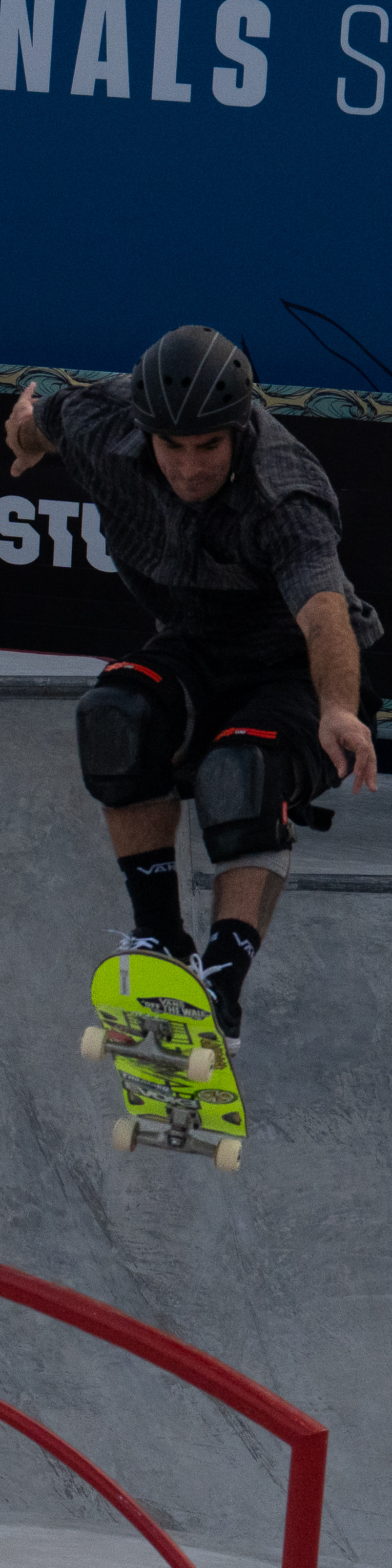
A person jumping unaided relies entirely on their own strength, coordination, and ability to generate lift. Skateboarding introduces another challenge: the rider has to get airborne while keeping the board moving with them, controlling its position throughout the trick and bringing it back underfoot for the landing. The movement involves much more than jumping. It demands precise timing and control over speed, balance, and force. The ollie, one of the essential building blocks of modern skateboarding, changed the way riders approached that challenge. Rather than simply leaping off the board, the skater learns to lift it through a coordinated sequence of movements, sending rider and board into the air together.
That ability developed over decades of experimentation and technical innovation. Skateboarding emerged in California in the mid-20th century, when surfers began looking for ways to bring the feeling of wave riding onto pavement. As boards evolved, so did the tricks riders could perform. The kicktail gave skaters greater control over the deck; advances in wheel design improved the ride; and Alan Gelfand’s ollie, introduced in the late 1970s, made it possible to lift the board without grabbing it. Rodney Mullen later adapted the technique to flat ground, helping establish the foundations of modern street skateboarding. Each breakthrough expanded the sport’s technical vocabulary and changed what riders understood the board to be capable of. The ollie was more than a new way to jump. It opened up an entirely different way of moving through urban space.