Pantanal revealed exhibition: a territory's soul.
The Rider of Tomorrow
- Date
- 2026
- Location
- Poconé. Mato Grosso, Brazil
Curatorial text
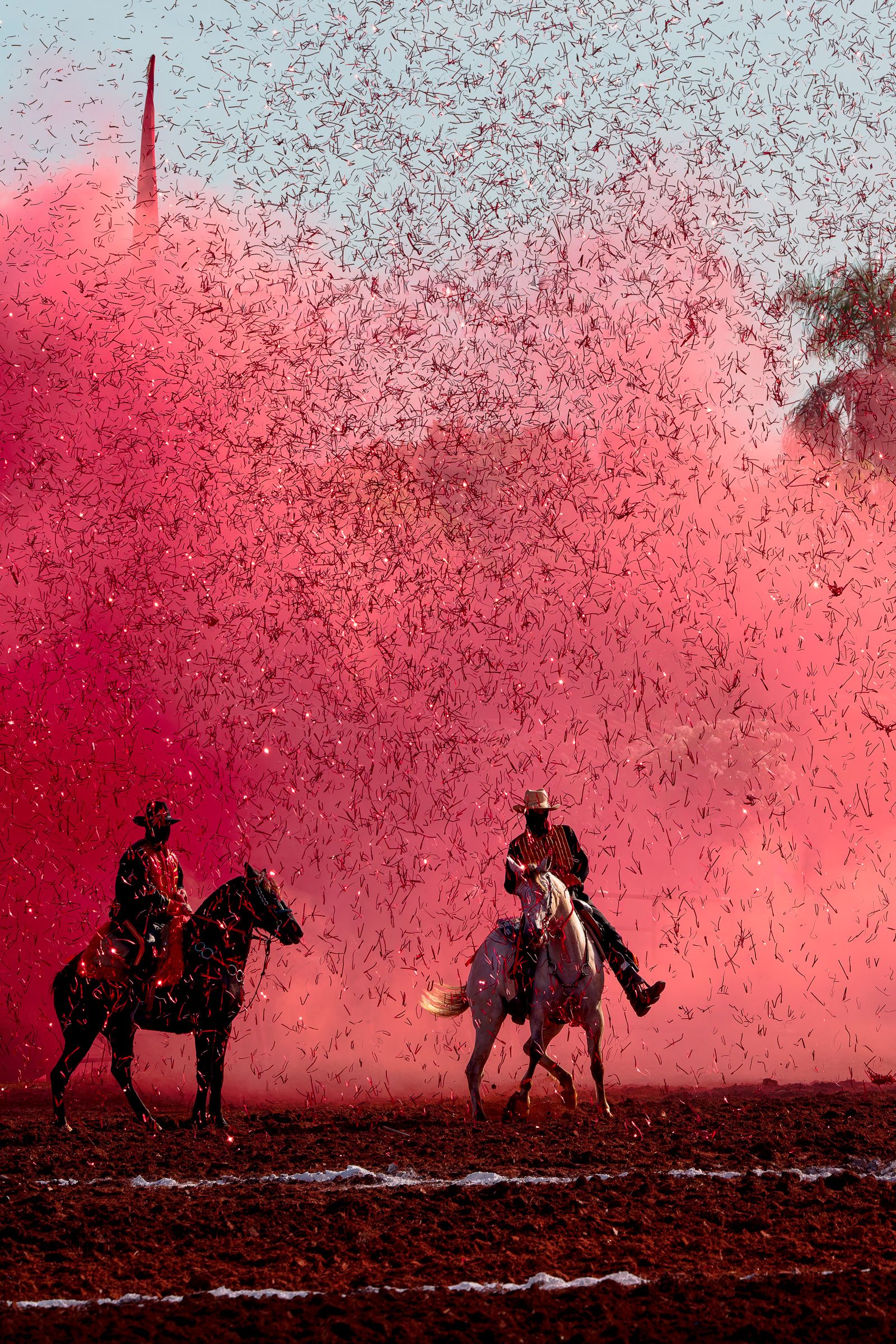
Two riders move across the arena beneath a storm of shimmering confetti. Smoke floods the scene with red, catching the light and breaking the figures apart. The horses seem to move through a world in constant motion. The rivalry between Moors and Christians is still there, but the spectacle has grown so large that the riders themselves become almost insignificant within it.
The Cavalhada is rooted in family. Children enter the tradition as pajens, accompanying the riders throughout the performance and staying in the arena for hours under the relentless sun. They watch, follow, and absorb the rhythm of the celebration simply by being part of it. As they grow, some eventually become riders themselves. In many families, participation continues from one generation to the next, with fathers, sons, brothers, nephews, and grandchildren all taking part over the years.
That inheritance also extends to the choice of side. The Moors and Christians each have their colors, characters, roles, and traditions. Children grow up surrounded by these identities, often within families whose allegiance has remained with the same side for generations. Each new generation enters the Cavalhada with a history already behind it, then finds its own place within the celebration.
Looking at this photograph, I see two men who already belong fully to that world. The future of the Cavalhada, however, exists beyond the edges of the frame, in the children who enter the arena beside them and begin learning the tradition from within. One generation is carrying out the ritual; another is already being formed by it.
The title comes from that passage. The Rider of Tomorrow is the child who has not yet taken his place on horseback, but whose path toward it has already begun within his family. The rider beside him may have once followed someone in exactly the same way. Years later, the child may return to the arena on his own horse, carrying forward what he learned there.