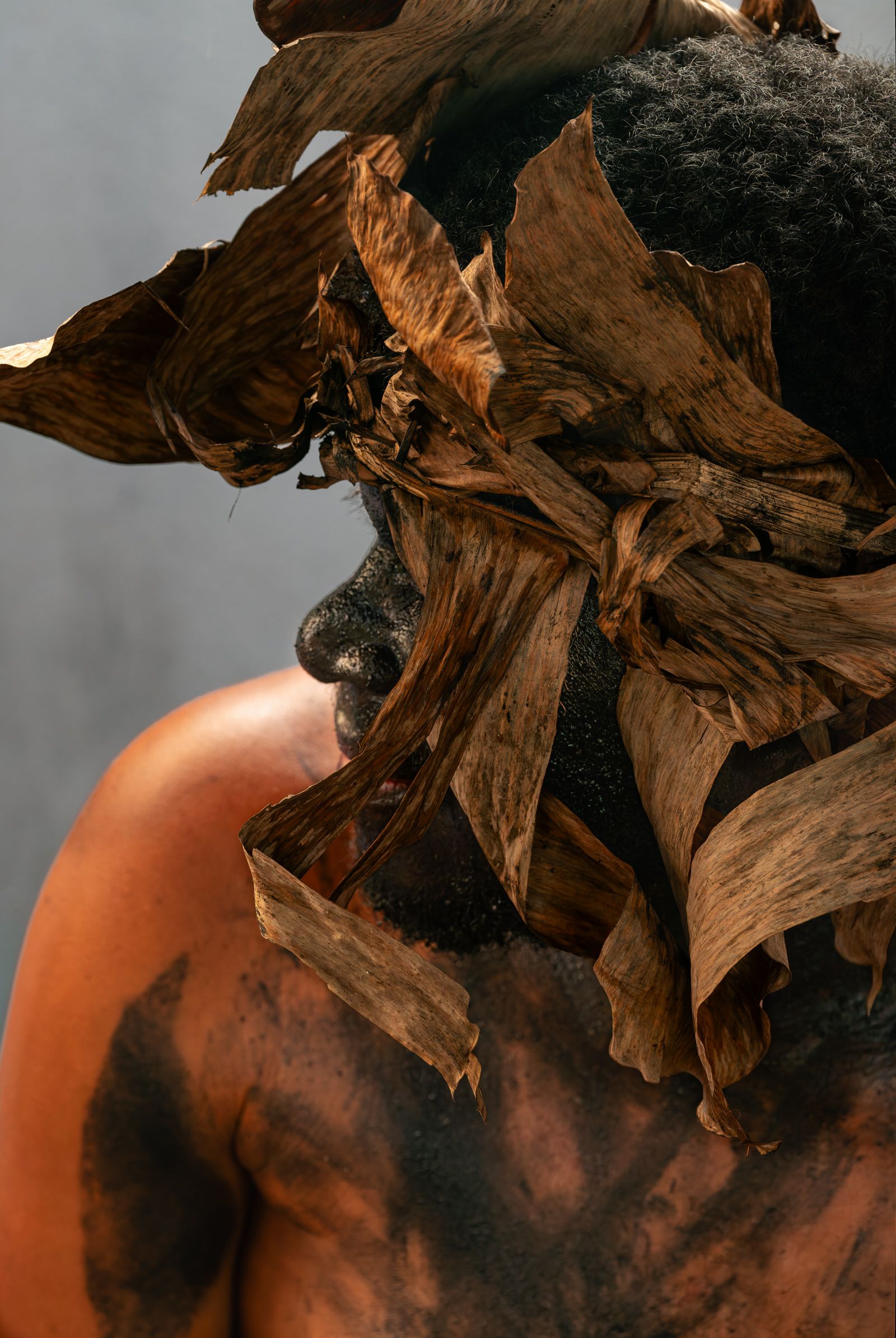
Nego Fugido
Shyness or Arrogance?
- Date
- 2026
- Location
- Acupe, Santo Amaro, Bahia, Brazil
Curatorial text
The question in this photograph’s title suggests two different ways of interpreting the same expression. Shyness and arrogance are commonly understood as opposites: shyness is associated with holding back in social situations, while arrogance conveys a sense of superiority. Yet a single expression rarely provides enough information to determine which interpretation is warranted.
The title offers no answer. Instead, it places the two possibilities side by side and draws attention to how we form judgments about other people. An expression may be taken as a sign of reserve or arrogance, depending on the observer’s expectations, the relationship between those involved, and the social conventions that shape the way we read it.
In Nego Fugido, a popular cultural tradition from Acupe, a district of Santo Amaro, Bahia, participants take on characters whose appearance is defined by clothing, makeup, posture, and distinctive ways of performing. The performance relies on a shared understanding of these conventions, which shape the interactions between characters and spectators. An individual’s expression can mean different things depending on its role in the scene.
The question in the title cautions against treating the photograph as a basis for judging the person portrayed. Shyness and arrogance cannot be established from appearance alone. The photograph captures a particular expression; the viewer interprets it and assigns meaning to it. Recognizing the difference between what is recorded and what is inferred is essential to understanding the limits of any judgment based on a single moment.
The contrast between the two terms also invites us to examine the social conventions that shape our perceptions. Reserve can be mistaken for disinterest, just as an assertive attitude can be perceived as arrogance. These associations are not universal. They depend on cultural expectations and social relationships that may not be apparent to the person looking at the photograph.
The title makes this uncertainty part of the way we read the image. Rather than defining the expression, it offers two possible interpretations that resist an immediate conclusion. The question does not ask the viewer to choose one over the other. It draws attention to how a visual impression becomes a judgment.
Shyness or arrogance? The question preserves the distinction between what the photograph shows and what we attribute to the person portrayed. Its force lies in recognizing that the way we look at others also reveals the standards we bring to our interpretations, exposing how fragile conclusions can be when they rest on limited evidence.