Abelha Rainha Exhibition (Queen Bee Exhibition) - Portugal
Where Mystery Begins
- Date
- 2026
- Location
- Salvador, Bahia, Brazil
Curatorial text
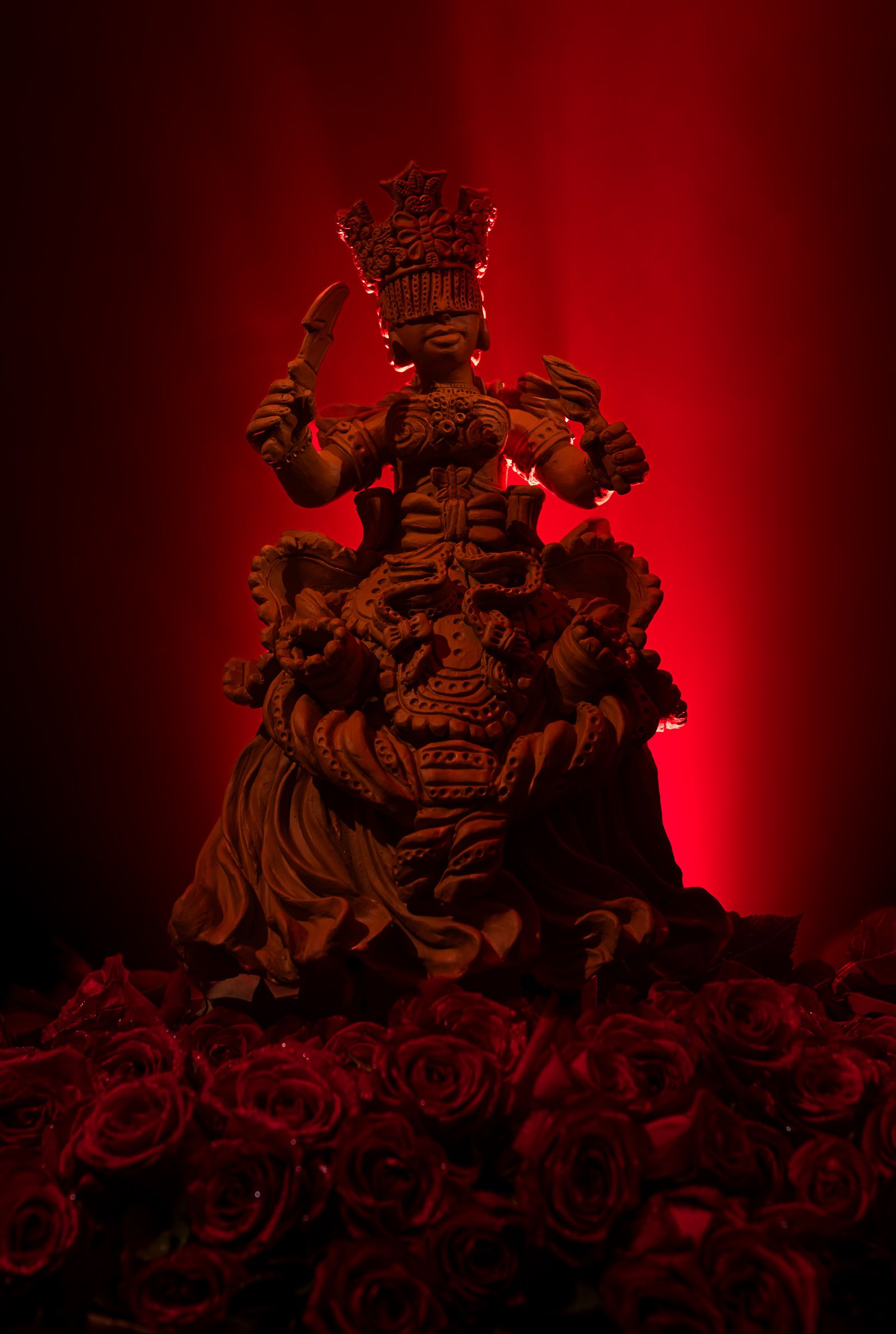
Every religious tradition has its own boundaries around what can be known, taught and interpreted. Knowledge is shaped by generations of practice and entrusted to people whose authority comes from within the community. These distinctions are essential when approaching Oyá. Her mythology touches on some of the most profound aspects of human existence, from our ties to those who came before us to the forces that sustain life across generations.
Her connection with Egúngún brings the question of ancestral authority into focus. In Yoruba thought, the ancestors are not simply the departed, preserved in the memories of the living. They belong to a larger understanding of existence in which generations remain connected. This is a religious conception with its own foundations and forms of transmission. To understand it, one must engage with the tradition on its own terms and acknowledge the communities that have safeguarded its teachings.
Myths demand the same respect. Their stories carry a particular understanding of the world, shaped by relationships, events and religious principles. Reading them properly requires knowledge of the worldview from which they emerged. Strip away that context, and their meaning changes. Turning them into universal symbols may make them easier to interpret, but it also erases the cultural and religious knowledge that gives them depth.
The study of Oyá begins with an acceptance of what an outsider can and cannot claim to know. Research can bring greater understanding, yet familiarity with a subject does not confer the authority to speak for the tradition behind it. That distinction is central to serious inquiry. It also recognizes that the responsibility for preserving this religious heritage belongs to the communities that continue to practice and transmit it.