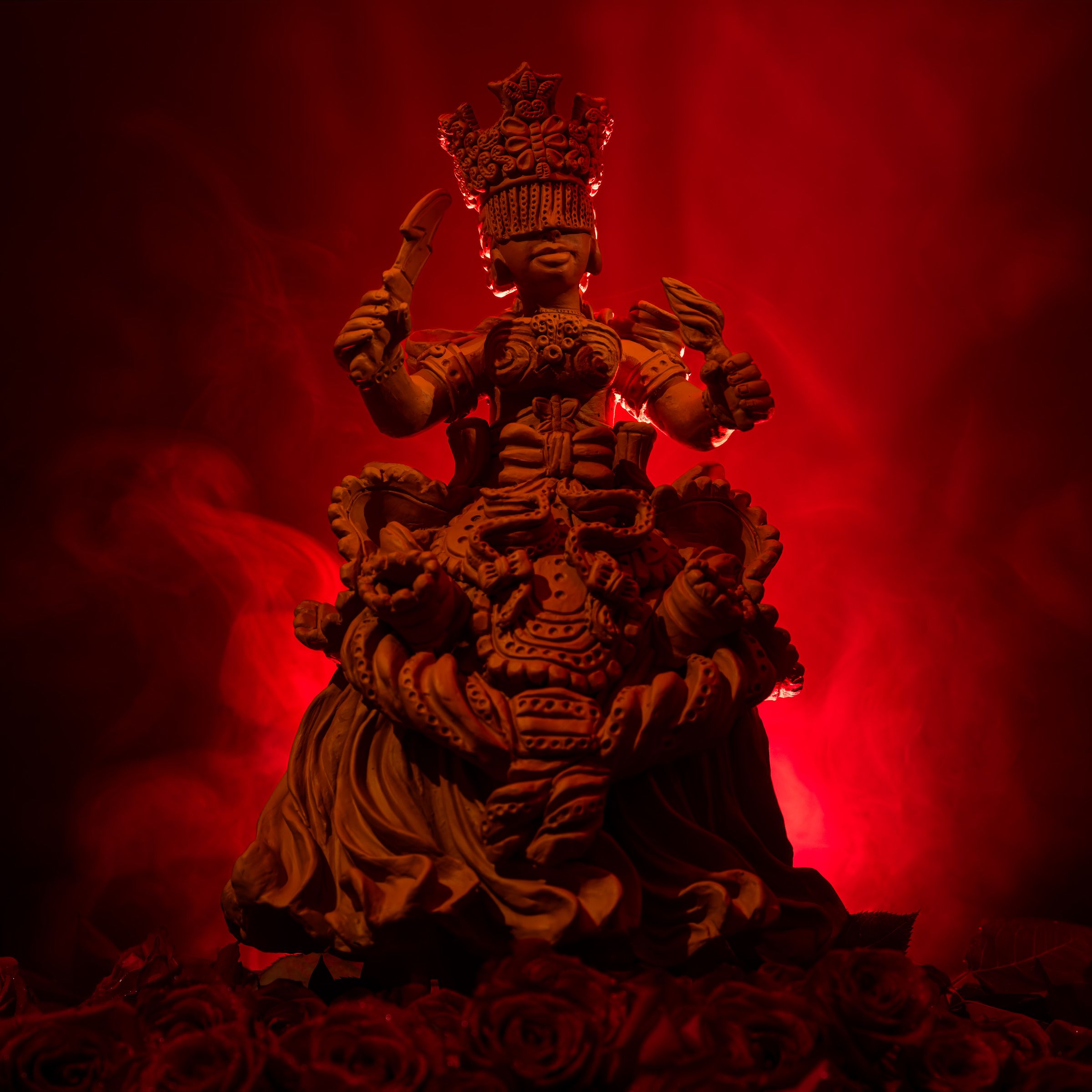
Abelha Rainha Exhibition (Queen Bee Exhibition) - Portugal
The Emblem of Breath
- Date
- 2026
- Location
- Salvador, Bahia, Brazil
Curatorial text
What does it mean to make art in response to a divinity? The question reaches beyond the possibilities of visual representation and touches on the limits of artistic expression itself. A religious tradition carries histories, beliefs and forms of knowledge that no single image can fully encompass. This has been the underlying concern of the present body of work, begun with The Annunciation: Maria and Oyá. The encounter between religious references and Maria Bethânia’s artistic experience provided the starting point for a broader exploration of the forces that shape creative expression. Each photograph that followed brought a new perspective to this ongoing inquiry into Oyá.
Mário Cravo Júnior offers a compelling reference for considering the relationship between art and religious culture. Speaking about his fascination with Candomblé, he drew attention to its spontaneity, rhythm, energy and movement. His observations are significant because they recognize the creative vitality of a tradition that continues to shape the imagination and sensibilities of those who encounter it. For an artist, such an encounter can become the beginning of an independent visual language, provided it is approached with knowledge, thoughtful engagement and creative freedom.
The emblem in this title also evokes the choices and responsibilities involved in making an image. Every photograph reflects a position: a way of looking, a selection of references and an understanding of the subject. Breath, in turn, suggests the force that brings form to life. It evokes the animating impulse behind creation, the moment when an idea takes shape and becomes capable of reaching another person. Together, these ideas place photography within a broader artistic and intellectual inquiry.
The seven photographs belong to a single investigation, although each approaches its religious and cultural subject from a different direction. Their titles reveal the successive stages of that process. Seen as a whole, the series records the development of an artistic perspective seeking to engage with Oyá’s richness without claiming to define or contain her divine nature. The connections between the works also reveal the author’s own journey: the decisions that shaped the project and the commitment to approaching this religious heritage with due seriousness.
Art has a remarkable ability to carry an experience beyond the circumstances of its creation. A photograph can speak to someone unfamiliar with the traditions behind it, stirring curiosity and opening the door to further discovery. This is among art’s most valuable contributions: the possibility of turning admiration into a desire to understand, and that desire into respect.
The Emblem of Breath brings the series to a close with a reflection on the enduring power of artistic creation. Through images, what deserves to be remembered, celebrated and passed on can continue to find a place in the world.