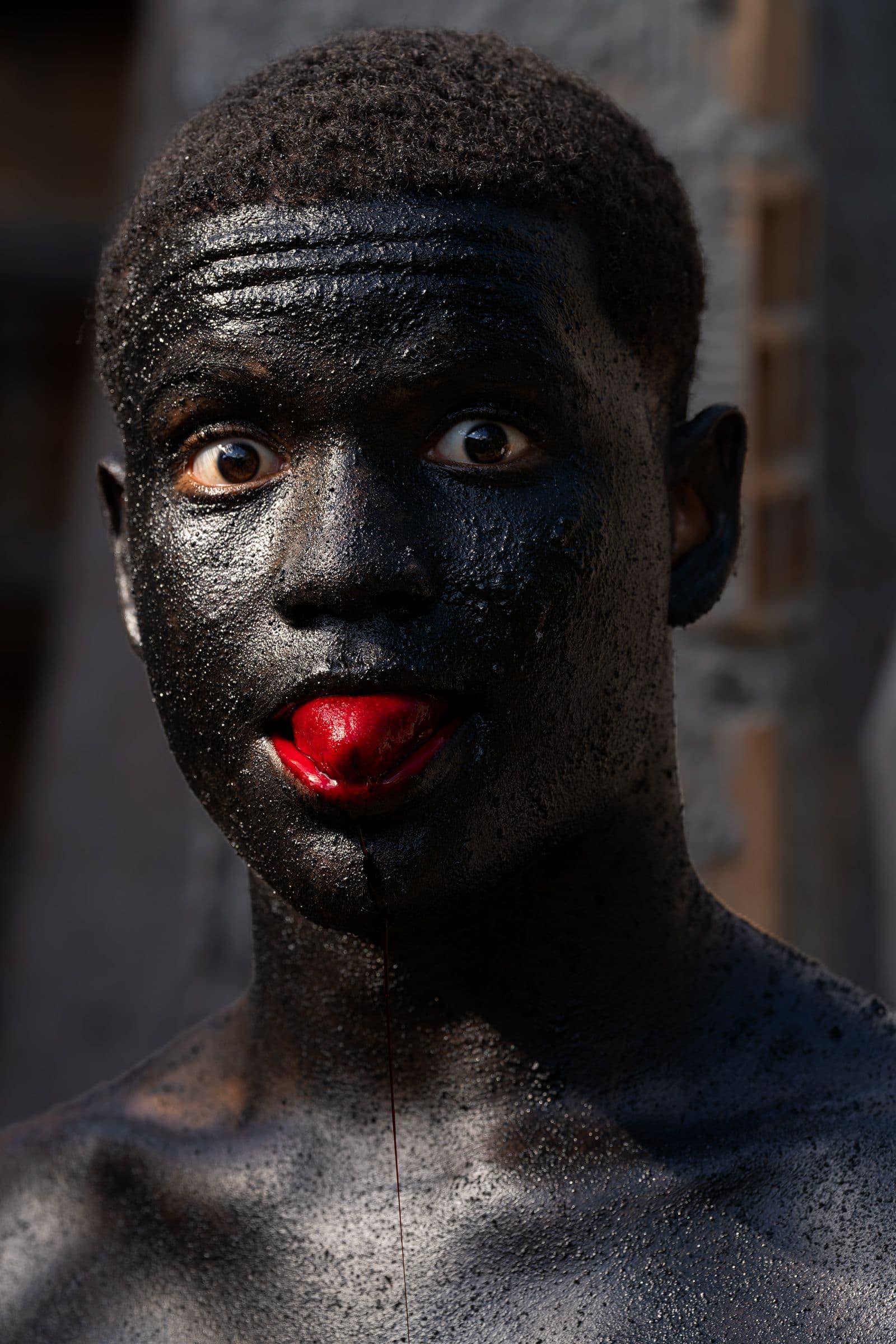
The Loveliness of the Strange Portrait
For a long time, certain photographs made me question my own choices. If a color felt too intense, a contrast unsettled me, or a shadow carried more weight than someone expected, I would return to the image. I was trying to understand another person’s way of seeing and, at times, bring the photograph closer to a more broadly shared perception.
That exercise mattered. So did realizing that considering another person’s perception does not mean allowing it to dictate the image. A photograph remains the result of a choice, and every choice carries a particular way of seeing.
Recognizable beauty has always fascinated me. There is something deeply seductive about precise light, makeup, carefully rendered skin, and the elegance of a composition. I have no desire to break with that world. What emerged was another possibility for enchantment.
It began to appear in photographs that departed from the familiar conventions of portraiture. A color pushed to the point of intensity, a marked surface, a reflection, a shadow, an unexpected expression, a proximity capable of changing the way a face is perceived. Small visual details began to acquire a force that depended on no ideal of appearance.
Attention to detail has always been at the heart of my photographic practice. Many of these portraits grew out of that impulse, without a project behind them and without any intention of bringing the images together under a single idea. I made them because something in that particular moment caught my attention.
The idea for the series came later.
Looking back at the images, I began to recognize a pattern that had never been planned. I was drawn to certain expressions, degrees of proximity, and irregularities within the image. These were portraits capable of disrupting immediate recognition and creating a different relationship with the person being photographed.
That was when the question of beauty took on another dimension.
What we call beautiful is shaped by conventions we learn to recognize before we even realize they are conventions. Photography knows these codes intimately. It also knows how to move away from them, distort them, interrupt them, and find visual interest in less predictable aspects of appearance.
That is where I find this particular kind of loveliness.
The word matters because it is not meant to establish a new aesthetic rule. It names an intimate response to images that may not conform to the most familiar standards of beauty. Some photographs enchant me precisely because they do not offer an immediately reassuring appearance.
Here, strangeness is part of the portrait’s construction. Proximity can alter a face. Cropping can strip a face of its familiarity. A fleeting expression can acquire an intensity it would never have outside the photograph. A fragment can become sufficiently autonomous to sustain the image on its own.
I am not interested in deciding whether these photographs are beautiful according to some standard. I am interested in recognizing the moment when an image stops asking for approval and begins to exert an attraction of its own.
This realization also changed my relationship with editing. In the past, a negative reaction could make me want to tone down an image, to make the photograph more accessible. Today, I ask a different question first: what is it about that intensity that made me choose it?
This is not about creating an aesthetic opposed to beauty. Conventional beauty remains fascinating. It is about widening our attention to forms of enchantment that can emerge beyond it.
Perhaps that is why the title led me to this particular word.
I know that some of these images do not correspond to what we ordinarily call beautiful.
And yet, look at how much they enchant me.
The series remains open because the discovery remains open as well. There is no predetermined number of photographs and no fixed point at which I intend to bring it to an end. New portraits may emerge whenever this way of seeing once again recognizes a form of beauty that might previously have gone unnoticed.
For me, photography has also become a place of change: a way of discovering that taste is not fixed, and that what we have learned to call beautiful can acquire new dimensions when the eye finds new reasons to be enchanted.