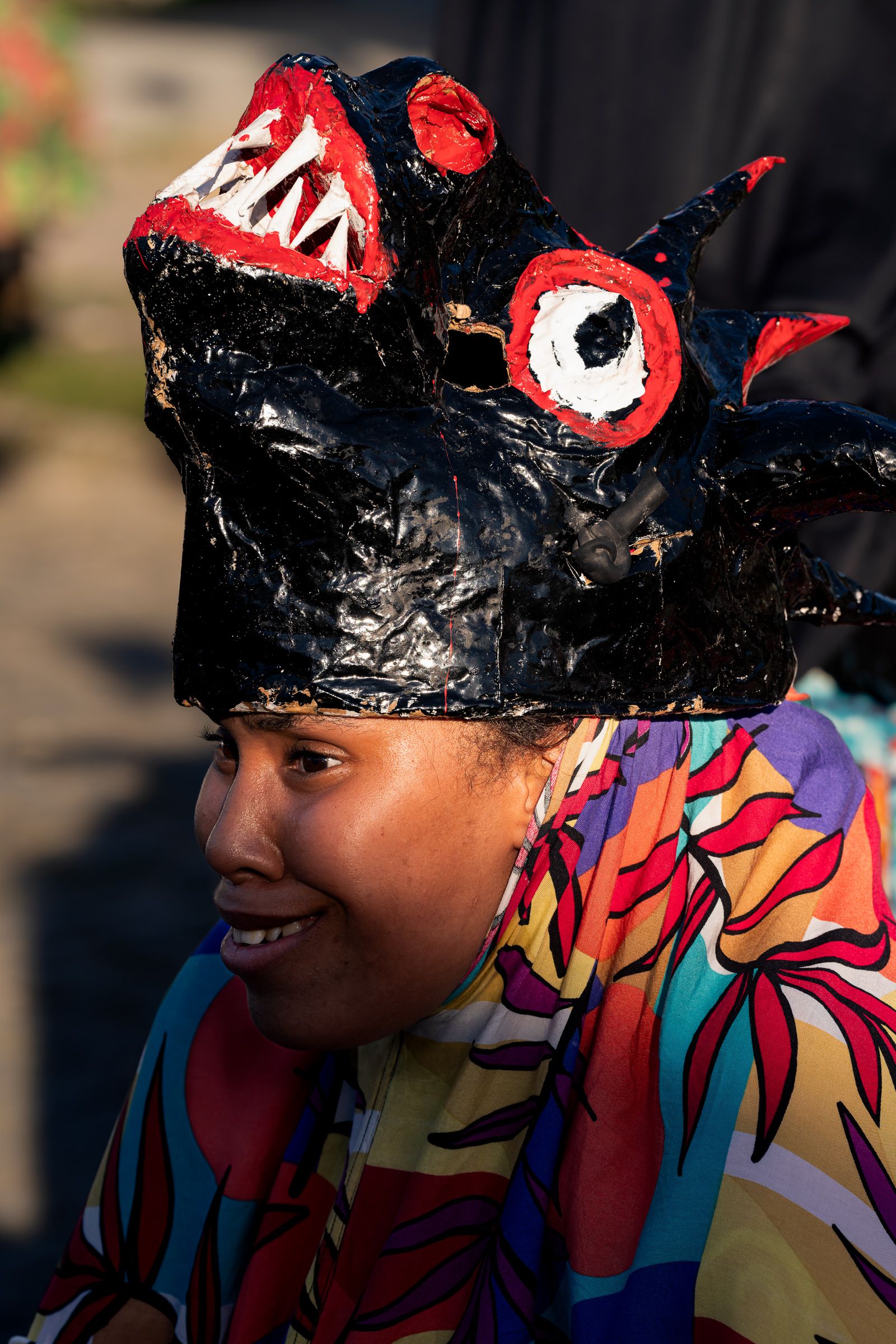
Grimaces of Acupe
Tãnãnãnãnãnãnã
- Date
- 2026
- Location
- Acupe, Santo Amaro, Bahia, Brazil
Curatorial text
By the end of that afternoon in Acupe, I was already making my way to the meeting point we had agreed on with the photographers from Salvador before heading home. Everyone was beginning to feel the fatigue. Some were still fooling around; others were already taking off their clothes and masks, drinking water, and getting ready to leave. When the girl in the photograph took off her mask, her friends pretended to be scared. It was a simple joke, but it immediately brought me to another scene, another time, another life.
I thought of Os Trapalhões. I remembered Mussum appearing in a mask and, when he took it off, Didi shouting, “The monster, the monster…” I loved Os Trapalhões. The memory came back all at once, without my looking for it. What was happening in front of me suddenly connected with something that had been part of my cultural upbringing, and for a few moments the two existed side by side. The music made the association even stronger.
That kind of encounter is at the heart of my relationship with photography. The shutter is released in response to something concrete happening in front of me, but what a photograph comes to mean to the person who made it is not limited to what was recorded by the camera. An image can carry a memory, an association, a feeling, or a cultural reference that emerges because something being seen suddenly connects with something already lived.
“tãnãnãnãnãnãnã” comes from that movement. The title comes from the sound, the joke, the music, and the memory that returned in that instant. There is no rigid separation between what was happening in Acupe and what came back from another time. The photograph brought together two events that had never been connected before, because it was through making the photograph that the connection took shape for me.
Perhaps that is why I smiled even though I was tired. I was looking at something that belonged to that afternoon, but I was also encountering something that came from much further back. The photograph did not carry only what I saw in that instant. It also carried the way I responded to what was before me. That is where I recognize one of the things that interests me most about photography: what happens in front of the camera can continue unfolding within the person behind it long after the shutter has been released.