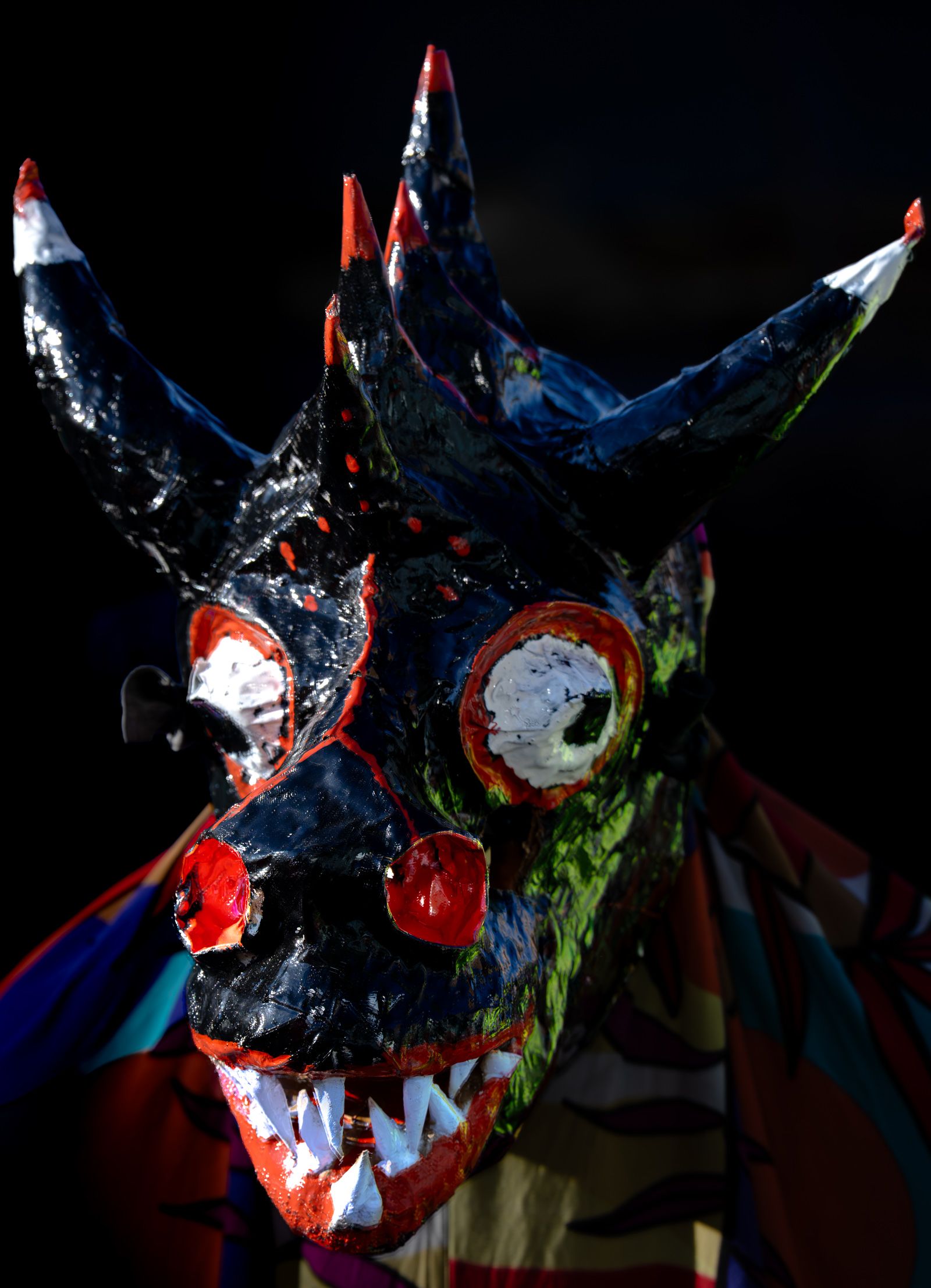
Bahian Rhinoceros
Zoology textbooks will never record this species.
Not because it lacks bones, muscles, or blood, but because it has never belonged to the realm of nature. It belongs to another, far more difficult field to catalog: collective invention.
There is a recurring mistake in assuming that popular creation strives for fidelity. It never has. Its ambition has always been something else. Not to reproduce the world, but to expand the number of things the world is capable of containing.
The rhinoceros from Acupe does not represent a rhinoceros. It represents the freedom to abandon the obligation of resemblance.
Every representation begins under the authority of a model. Every true act of creation begins when the model ceases to matter.
For that reason, perhaps the poorest question to ask when looking at this photograph is: “What does it look like?”
The more fruitful question would be another.
What made it possible to imagine a creature that no necessity demanded and that nevertheless came to claim a permanent place within a celebration?
The Caretas de Acupe answered without writing treatises, manifestos, or theories. They answered by producing a form that claims neither zoological authenticity, historical accuracy, nor aesthetic fidelity. It claims only the right to exist.
Perhaps every culture reaches maturity when it stops repeating the world and begins adding something to it.
This rhinoceros never walked across the African savannas.
That did not stop it from finding its habitat: the Bahian Recôncavo.