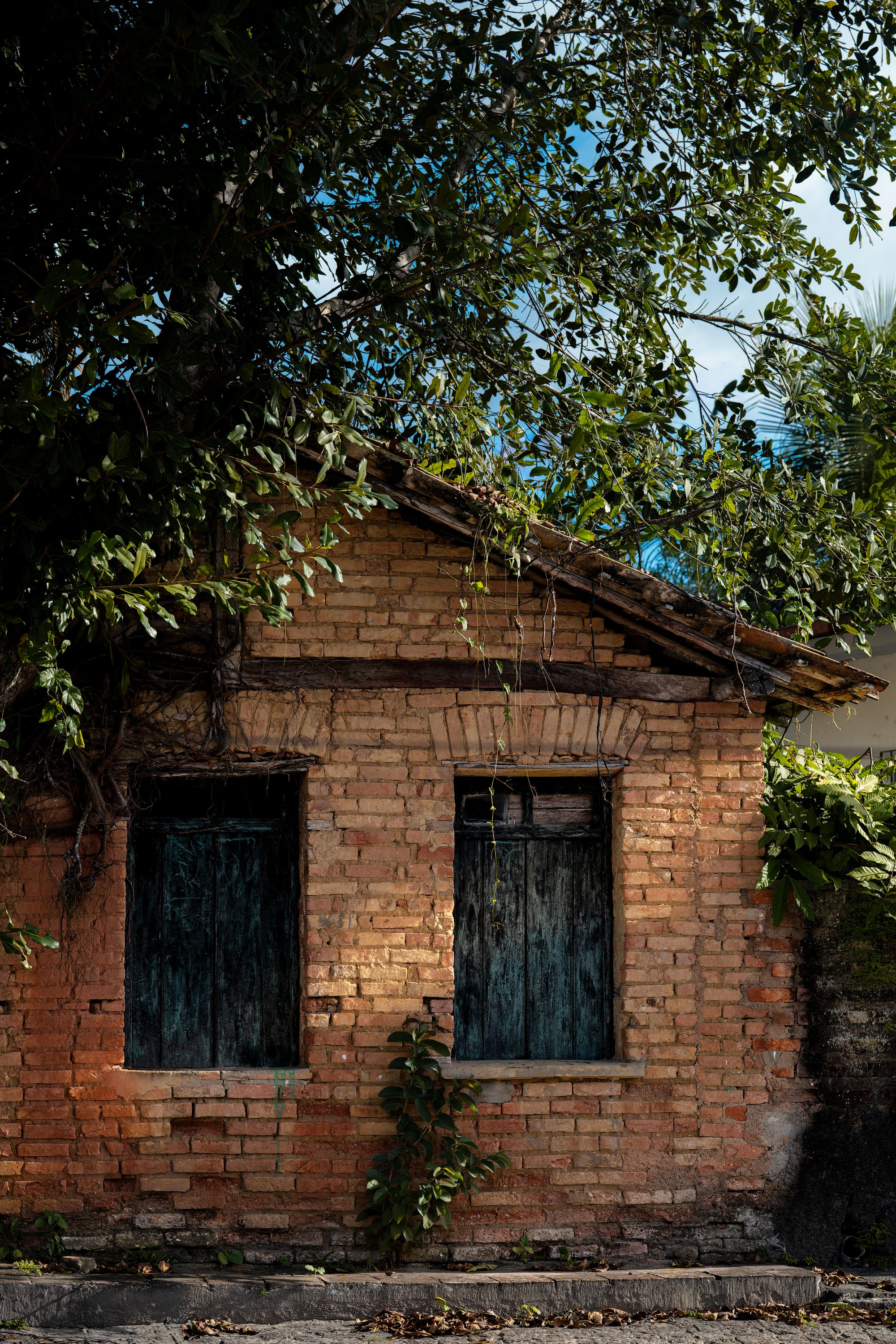
My Little House in Marambaia
This house isn’t mine. It isn’t in Marambaia. It has no veranda, and I don’t play the guitar. And yet, the moment I saw it, I made it mine through a kind of recognition that reason had never been asked to authorize.
The title came to me immediately from the song “Só Vendo Que Beleza (Marambaia),” written by Rubens Campos and Henricão and recorded by several artists, including Omara Portuondo and Maria Bethânia. The Marambaia in the song refers to the region of Marambaia Island, along the coast of Mangaratiba, in Rio de Janeiro, a setting that research on the song recognizes as a reference for the landscape described in the composition.
I am fascinated by Omara and by Cuban music. For years, this song had been building countless houses inside my imagination through years of silent singing. Each time I listened to it, its architecture seemed to change. I had never imagined, though, that the house might look like this.
Standing before this one, imagination found matter. It stands by the beach, and the peace I had always heard in the song seemed to take shape. Along its side, an old cattle gate, enclosed by vegetation, gave the house an almost secret passage. The image of that entrance also brought back the memory of The Secret Garden, Frances Hodgson Burnett’s book, with its idea of a place protected by the vegetation itself, whose discovery depends on crossing a kind of threshold.
And the dark-haired man is me.
Not because the song placed me inside it, but because, in that moment, I recognized in that house a home that had already existed somewhere in my imagination. It wasn’t the house from the song. It was the house the song had left inside me.
And so my little house in Marambaia became this: the house of my imagination, my silence, and my peace.