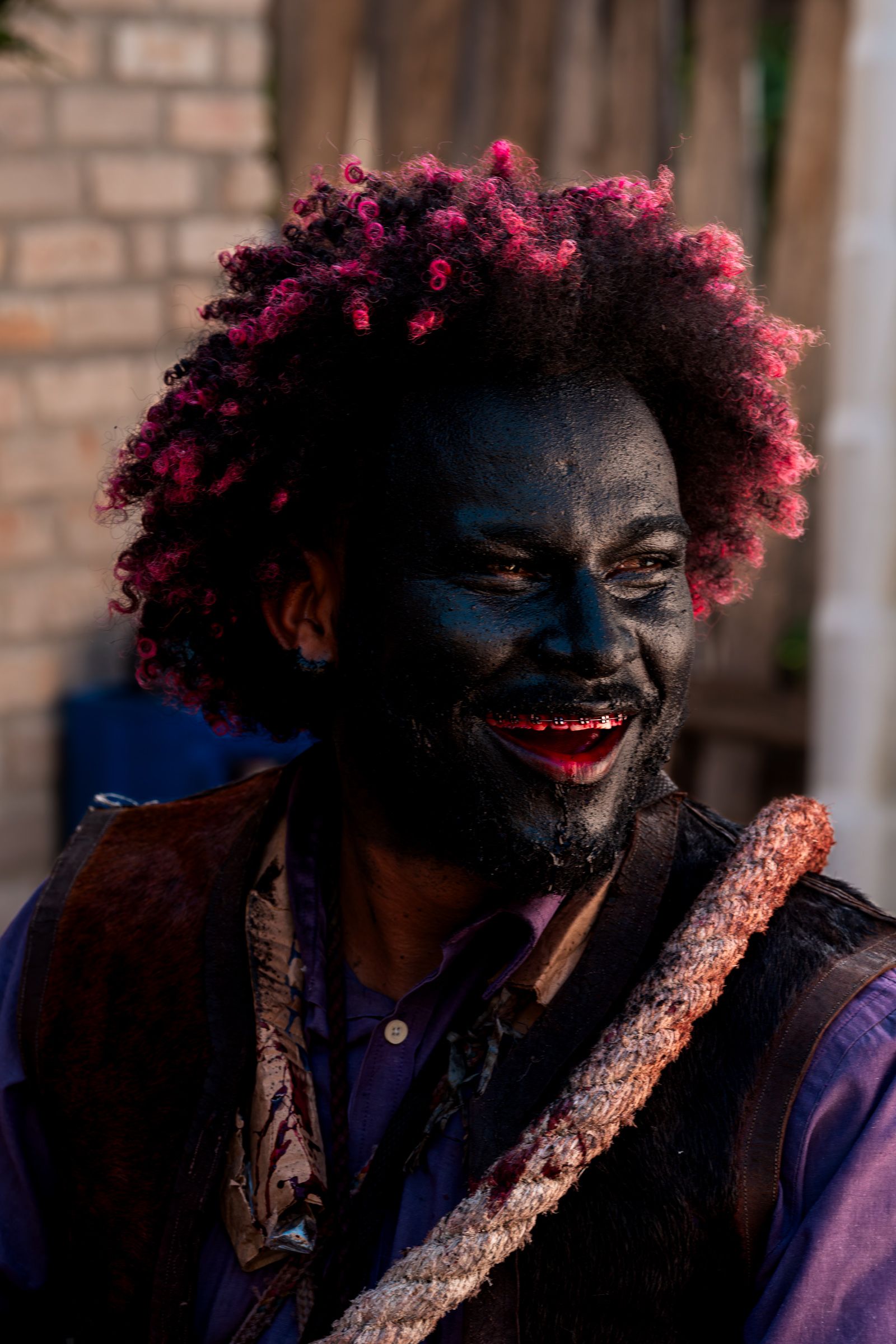
Color Is Not a Coincidence
Color is one of the elements of composition that draws me in most. I’m from Bahia, and this relationship has long shaped the way I see Bahia and Africa. I also recognize that attraction in personal choices, such as my taste for colorful sneakers and clothing. For some time, I had been noticing this recurring fascination and wondering whether it might have something to do with cultural experiences that extend beyond individual preference. That was when I decided to investigate.
I looked for research that could help me understand whether there were documented connections between Black populations and particular ways of perceiving, choosing, or assigning meaning to color. I found studies of color perception conducted in Africa and the United States, with results showing differences among certain groups, but no evidence supporting the idea of an innate racial preference for color. I also found anthropological research showing how colors can occupy important places in the symbolic, ritual, and cultural systems of different African societies.
The research made me realize that perhaps my original question was framed incorrectly. It is not really about discovering whether Black people “like color more,” as though a single shared characteristic could explain such a diverse experience. The question becomes much more interesting when we look at what different cultures do with color and the meanings they construct around it.
For me, this brings the research back to the photograph itself. The chromatic intensity that attracts me does not need to have a single origin. It can be connected to perception, personal repertoire, memory, culture, identity, or simply to the force that certain combinations exert on the eye. What I initially sought as an answer ended up expanding the question.
(If this photograph sparked the same curiosity that led me to investigate, there is more to explore. The full, original text of this reflection is on the Fragmentos page, under the same title and with the same photograph, where I present the research and develop the questions that only appear here in part. Go to Fragmentos and read the full investigation behind this image.)