Time
Back to the future
Curatorial text
Sometimes, looking back is the only way to understand where we’re headed. Not because we want to return to what’s gone, but because time gives us a perspective we couldn’t have had while we were living it. The past doesn’t change, but our understanding of it does.
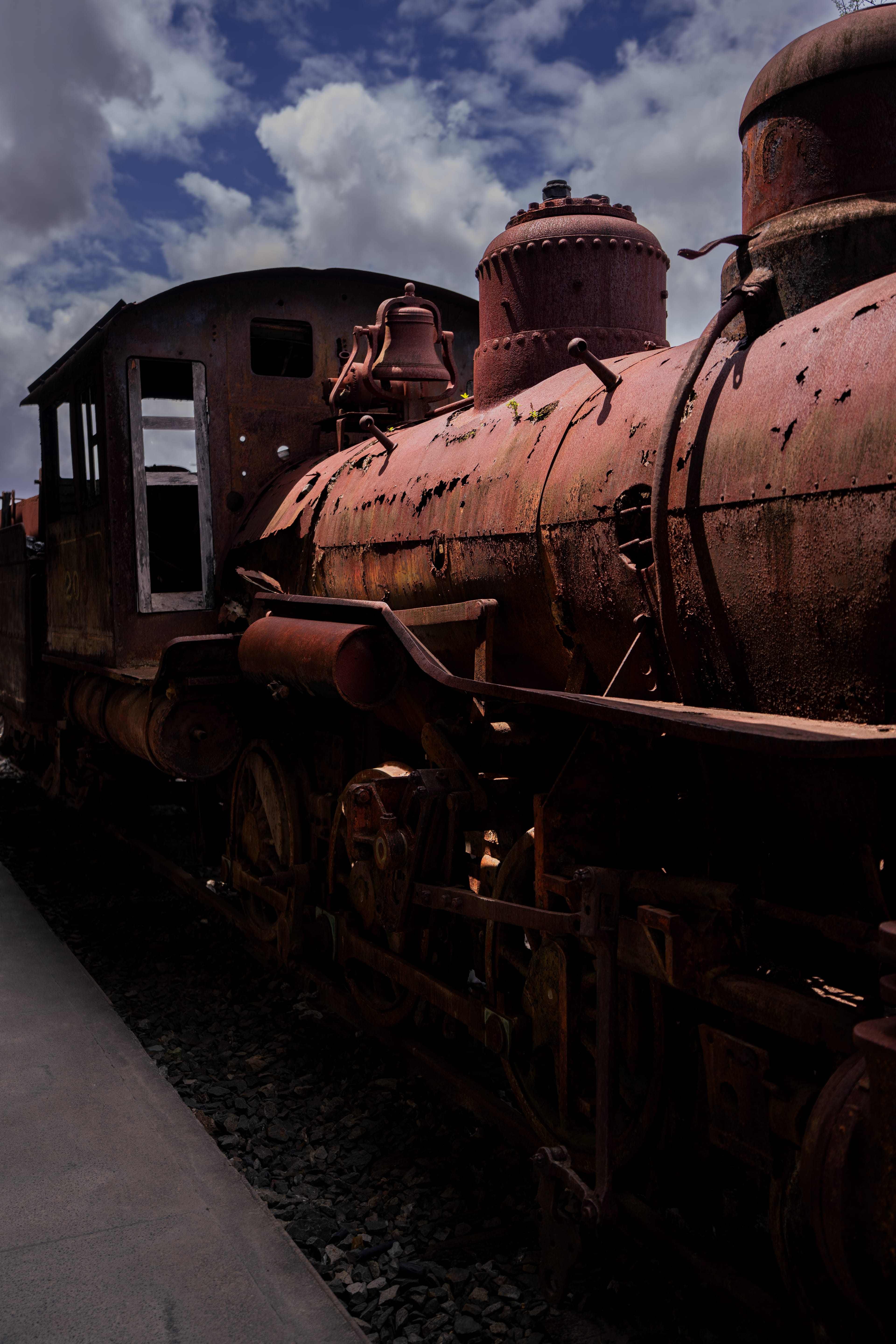
When I saw this locomotive at Calçada Station, I immediately thought of Back to the Future Part III, where a train takes the place of the DeLorean and becomes the machine that carries Marty and Doc through time. Here, the train doesn’t move. The journey happens somewhere else: in memory.
I’ve always been more drawn to what has already happened than to what I can’t yet see coming. There’s something reassuring about lived experience. We know what we learned, what we lost, which choices brought us here. The future offers none of that. Looking back can be a way of finding our bearings before choosing the next direction.
Life has its own network of tracks. Every station grows out of the one before it, and every junction offers a new route while leaving others behind. Some people travel with us for years. Others share only a short stretch. Some arrive unexpectedly; others leave before we understand how much they mattered.
With time, we learn to change course. We can’t return to earlier stations, but we can understand more clearly why we took certain tracks and what those journeys taught us. This locomotive no longer carries passengers. Its working life belongs to another era, yet it still holds something essential: the possibility of looking back before deciding where to go next.
Perhaps that is why a train frozen in time can still say something about the future.