Bahian Photographic Metalinguage
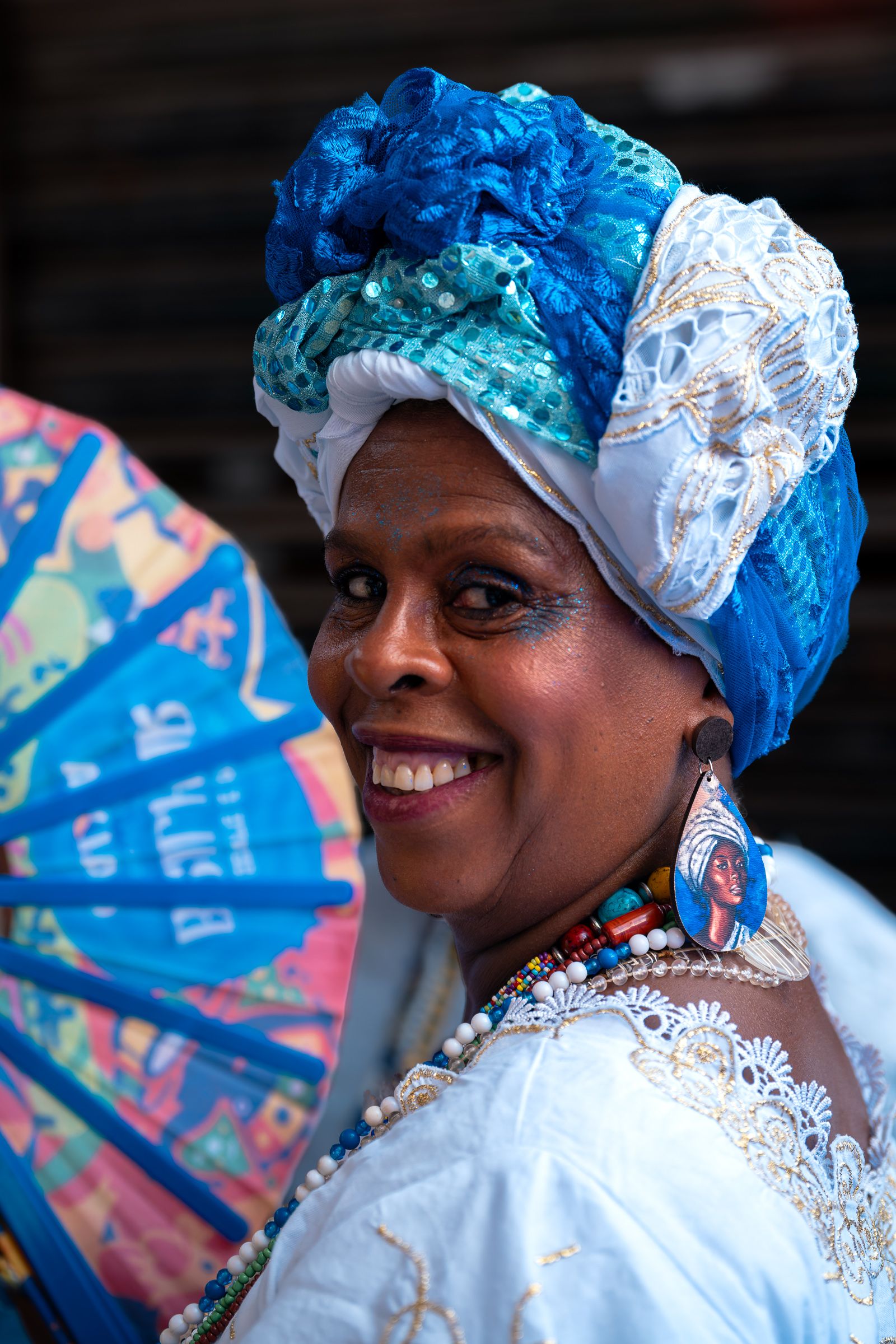
At the Marujo Party, an image can carry another image of itself. The woman in the photograph appears dressed as a baiana and wears, attached to her own hoop earring, a photograph in which she is also represented as a baiana. The representation returns to the person being represented, creating a metalinguistic layer within the scene itself. Her body becomes a support for the image, while the image reinforces an identity shaped by clothing, adornment, and belonging.
The Marujo Party is part of Afro-Brazilian religious traditions in which the Marujo is venerated as an entity in both Umbanda and Candomblé traditions. Anthropological scholarship places the Marujo among entities shaped by Brazil’s historical and cultural experiences, distinguishing him from the orixás. In different contexts, his presence is associated with the world of water, the experiences of sailors and fishermen, and forms of spiritual assistance and mediation. The diversity of interpretations reveals that there is no single definition capable of fully containing his presence within the communities that venerate him.
This photograph emerges from the encounter between a cultural practice and the image’s ability to generate layers of meaning. What initially appears to be a detail of an adornment comes to reorganize the entire portrait. The photograph within the photograph does more than identify a person: it presents someone carrying a representation of herself, as though the image itself were participating in the construction of that identity.
Every photograph contains possibilities that extend beyond what the photographer intended to record. The same scene can produce different associations depending on the experience, memory, and visual repertoire of the person looking at it. Someone else might first notice the beauty of the clothing, the religious dimension of the celebration, the strength of the portrait, or the smile. Here, however, the image also offers a reflection on its own workings: we see a woman, we see a baiana, and we see the image of a baiana within the image we make of her.